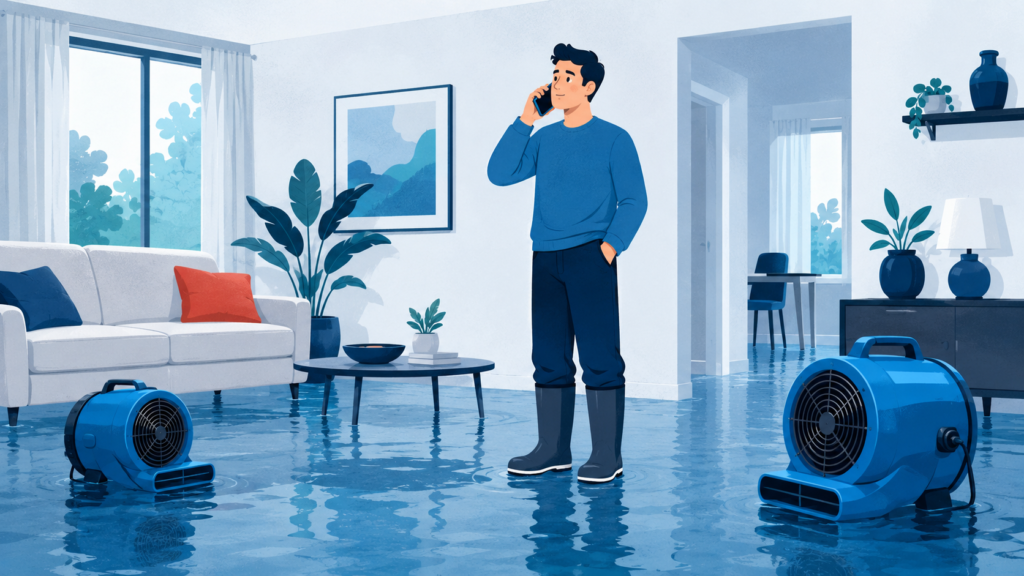
If your home just took on some water, take a deep breath. What you do in the first 24 hours makes a real difference in how much gets damaged, how much it costs, and whether mold shows up later. This guide walks you through exactly what to do after water damage, step by step, so you can act fast and stay safe. Whether it is a burst pipe, an overflow, or a flood, the order is the same.
Protect people first, stop the water, then start drying and documenting.
What to do after water damage, in order
Here is the short version. Each step is expanded below.
- Make sure the area is safe, especially around electricity.
- Stop the water at its source.
- Remove the water and start drying fast.
- Photograph and document everything.
- Call your insurance company.
- Call a restoration pro for anything beyond a small clean spill.
Start with safety, always
Before you touch anything, make sure the area is safe. Water and electricity are a dangerous mix. If water has reached outlets, cords, or your electrical panel, do not wade in. Shut off the power to that part of the house at the breaker if you can reach it safely, and if you cannot, stay out and call an electrician or your utility.
Be careful with the water itself too. Clean water from a supply line is one thing, but water from a sewage backup or an outside flood can carry bacteria and needs to be treated as a health hazard. If the water is dirty or you smell sewage, keep your family and pets away and let a professional handle it. When in doubt, step back and wait for help rather than risk it.
Stop the water at the source
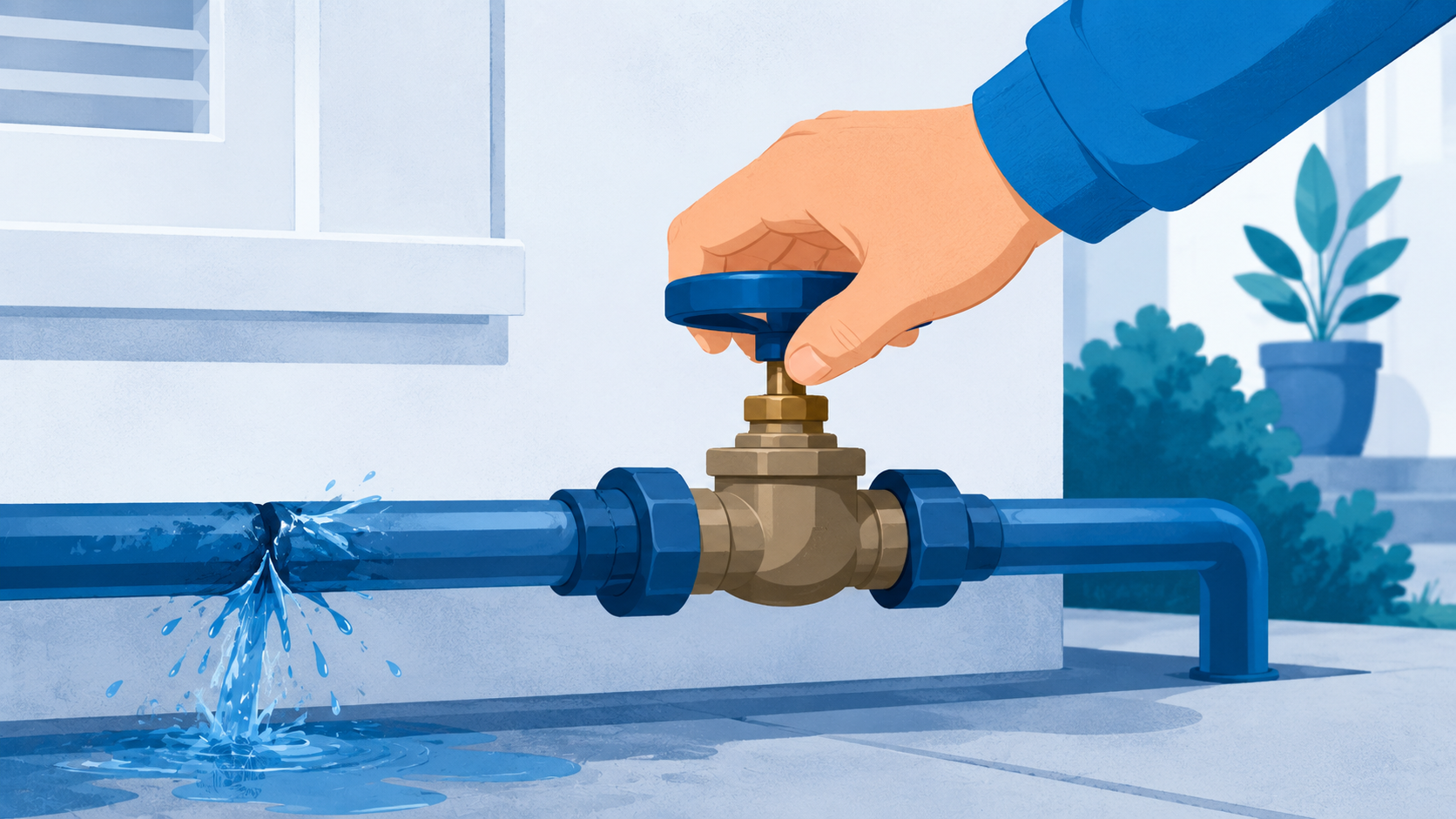
The next move is to stop more water from coming in. For a plumbing problem, shut off your main water valve. It is usually near where the water line enters the house, in a basement, crawl space, garage, or an outside box. It is worth knowing where yours is before an emergency, so find it now if you can.
If the water is coming from an appliance, like a washing machine hose or a water heater, turn off the valve to that unit. If it is a roof leak or storm water, you may not be able to fully stop it, so focus on moving belongings out of the way and containing the water with towels or a bucket until a pro can tarp or repair the opening. For a pipe that let go, see our guide on burst pipe and leak cleanup.
Get the water out and start drying
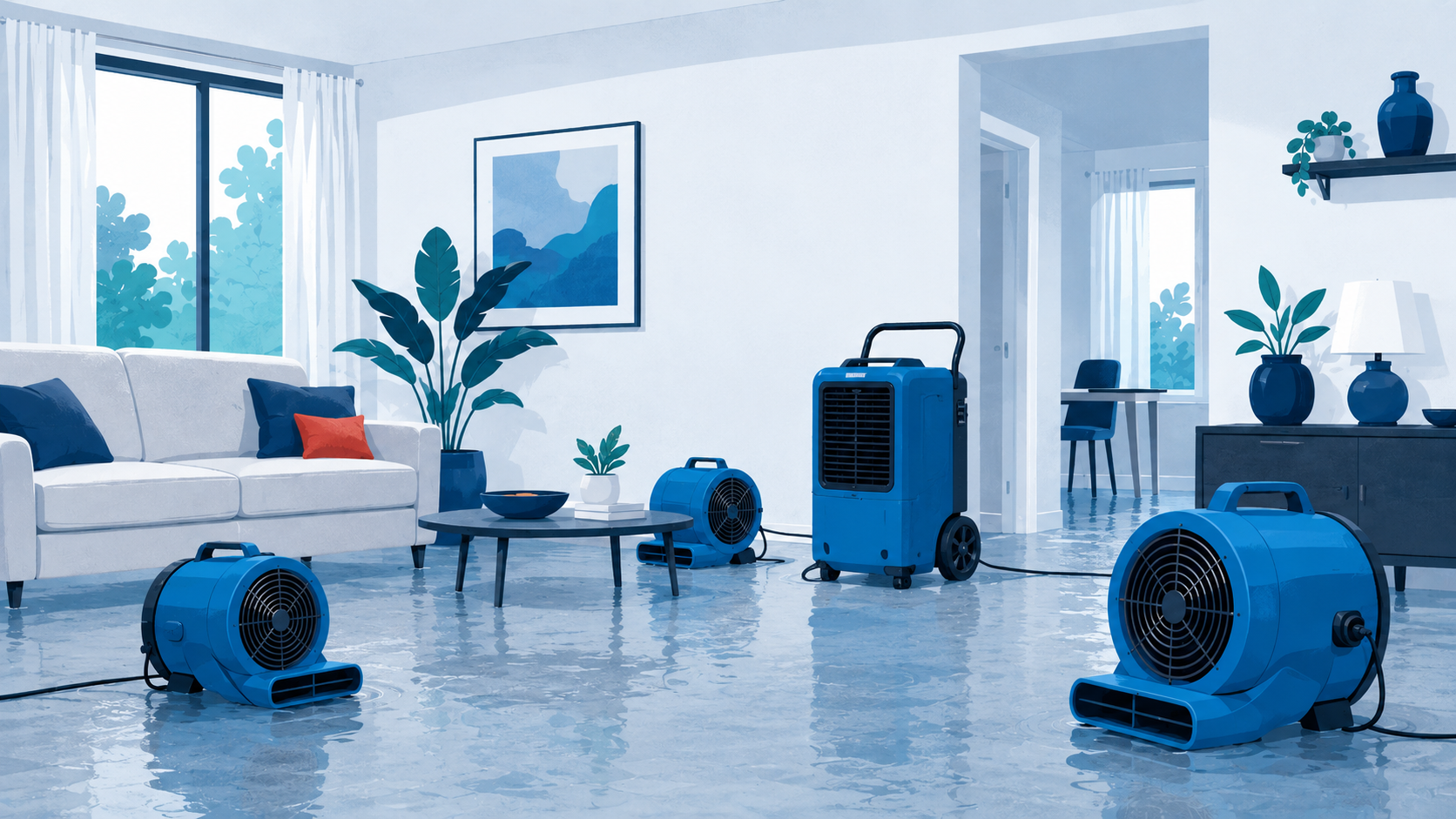
Once the source is off and the area is safe, start removing water right away. The longer water sits, the deeper it soaks into floors, drywall, and framing, and the harder it is to reverse. Use towels, a mop, or a wet vacuum for smaller amounts. Move rugs, furniture, and anything off the wet floor so it does not soak through and stain.
Get air moving. Open windows if the weather is dry, run fans, and turn on a dehumidifier if you have one. This helps, but know that home fans rarely dry what is trapped inside walls and under floors. That hidden moisture is exactly what leads to mold and warping, which is why a full flood usually needs professional water extraction and drying with commercial pumps and dehumidifiers.
Picture a common case. A family wakes up to a cracked washing machine hose that ran for hours overnight. The laundry room and part of the kitchen are under water, and it has crept toward the hallway carpet. They shut the valve behind the washer, cut the power to that area, and start pulling up towels and running the wet vacuum while one of them photographs the mess for the claim. By getting the water moving out within the first hour instead of waiting for morning, they save the hallway carpet and the kitchen cabinets from soaking through. That early hour is the difference.

Document everything for your insurance claim
Before you clean too much up, document the damage. Take clear photos and videos of every affected room, the standing water, the source if you can see it, and any damaged furniture, floors, and belongings. Get wide shots and close ups. This record is what supports your insurance claim, so more is better.
Make a simple list of damaged items with rough values, and hold onto receipts for anything you buy during the cleanup, like a wet vacuum or a hotel stay. Do not throw away ruined items until your insurer has seen them or told you it is fine, because they may want to inspect them first.
Call your insurance company
Reach out to your insurer as soon as the situation is stable. Explain what happened, ask what they need, and write down who you spoke with, the date, and your claim number. Ask whether they have a preferred restoration provider and what your policy covers before work begins.
Most homeowners policies cover sudden and accidental water damage, like a burst pipe or an overflow, while slow leaks that were ignored and outside flooding are often handled differently. Coverage varies by policy, so let your insurer confirm what applies to your situation rather than assuming.
Why the first 24 hours matter so much
Here is the reason speed matters. Mold can begin to grow within about 24 to 48 hours in the right conditions, according to the EPA. Once water soaks into porous materials and the air stays humid, spores take hold and spread. Drywall swells, wood warps, and a musty smell sets in. Everything you do quickly in that first day, stopping the water, getting it out, and drying the space, is what keeps a cleanup from turning into a mold problem. If mold does appear, do not scrub it yourself, since that can spread spores. See mold remediation.
What happens hour by hour
It helps to picture how water damage unfolds, because it explains the urgency. In the first few minutes, water spreads across the floor and starts wicking up into baseboards and drywall. Within the first few hours, that moisture soaks deeper, finishes on furniture can bleed, and a damp, musty smell begins. By the one to two day mark, mold can start to grow, wood begins to swell, and what was a cleanup becomes a repair. Nothing about water damage improves with time, so the sooner you act, the smaller the job stays.
When to call a restoration pro
Some water damage you can handle on your own, and some you should not. A small, clean spill you caught early is often a towel and fan job. But call a professional when the water covered a large area, soaked into walls or under floors, came from sewage or a flood, or sat for more than a few hours. Pros have the pumps, meters, and dryers to pull out moisture you cannot reach, and they can spot damage before it becomes structural.
If you are not sure, it costs nothing to ask. You can request help online or call and get connected with a trusted local restoration pro who can assess it fast, 24/7.
Common mistakes to avoid
- Walking into standing water before the power to that area is off.
- Waiting to see if it dries on its own. It usually does not, and the delay invites mold.
- Throwing out damaged items before taking photos or talking to your insurer.
- Cleaning up sewage or flood water yourself without protection.
- Assuming your home fans dried the inside of the walls. Hidden moisture is the part that causes trouble.
Key takeaways
When you know what to do after water damage, the first day becomes a lot less overwhelming. Keep people safe, stop the water, get it out and start drying, photograph everything, and call your insurer. Move fast, because the 24 to 48 hour window is what decides whether mold shows up. And when the job is bigger than a few towels, get a pro in early.
Frequently asked questions
What should I do first after water damage? Make sure the area is safe, especially around electricity, then stop the water at its source. Once it is safe, remove the water, start drying, take photos, and call your insurer.
How long do I have before mold grows? Often about 24 to 48 hours in the right conditions. That is why fast drying in the first day matters so much.
Should I turn off the electricity? If water is anywhere near outlets, cords, or your panel, yes, shut off the power to that area at the breaker if you can do it safely. If you cannot reach the panel without stepping into the water, stay out and call an electrician or your utility.
Will my insurance cover the damage? Sudden and accidental water damage is often covered, while gradual leaks and outside flooding are usually treated differently. Your insurer can confirm what your policy covers.
Do I really need a professional? For a small clean spill, maybe not. For a large area, water in the walls, sewage, or anything that sat for hours, yes, because hidden moisture and contamination are hard to handle safely on your own.
Water damage at your home right now? Call for fast 24/7 help or request help online and get connected with a trusted local restoration pro who can start the cleanup fast.
WaterDamageOnCall is a water damage information and lead request service. We are not a licensed restoration contractor. This article is general information, not professional restoration, insurance, or health advice, and a licensed local pro should assess your specific situation.