
It usually starts on a rainy night. A storm rolls across the valley, and somewhere in the house you hear a slow drip you don’t recognize. By morning there’s a dark ring on the ceiling, or the hallway carpet squishes under your socks, or you find a thin sheet of water creeping across the garage slab. Your stomach drops. You have no idea how bad it is, who to call, or what it’ll cost.
Take a breath. You’re going to get through this, and the next few hours matter more than you might think. If you’re dealing with water damage in Sacramento right now, the most important thing is to stop the water and start drying fast, because a wet home can turn into a mold problem in as little as 24 to 48 hours. Here’s what to do, what to leave to a pro, and how to keep it from spiraling.
First, make it safe
Before you touch anything wet, think about electricity. If water has reached outlets, appliances, or the panel, don’t wade in. Shut off power at the breaker if you can reach it safely, and if you can’t, stay out and call an electrician or your restoration crew.
Next, cut the water off at the source. For a burst supply line or a leaking water heater, close the shutoff valve on the fixture or the main line where it enters the home. Most Sacramento houses have the main shutoff near the front hose bib or in the garage, and knowing where yours is before an emergency is a great favor to yourself.
One more note that catches people off guard. A lot of local flooding comes from storm runoff or a sewer backup, and that water isn’t clean. If it smells, looks gray or brown, or came up through a drain, keep kids and pets away and leave it to a pro.

Why the clock matters so much in our climate
People are sometimes surprised that mold is a real worry in a place as dry as the Central Valley. It absolutely is. Mold doesn’t care what the weather is doing outside. It cares about moisture inside your walls, under your floors, and in your crawl space, and once materials get wet it can start to grow in about 24 to 48 hours. The EPA points to that same window as the reason to dry things quickly.
That’s why speed beats almost everything else. A small leak dried in a day is a minor repair. The same leak left for a week soaks into drywall, baseboards, and subfloor, invites mold, and turns into a much bigger job. We cover the details in our guide on how long it takes mold to grow after water damage.
Sacramento homes have their own quirks too. Most are slab on grade with a crawl space rather than a true basement, so water tends to hide under the slab or behind walls where you can’t see it. That’s why professional emergency water removal here leans so heavily on moisture meters and thermal cameras. The damage you can see is often the smaller half of the problem.
What you can safely do in the first hour
While help is on the way, a few things genuinely help, as long as the water is clean and the area is safe.
- Move what you can. Lift furniture legs onto foil or wood blocks, and get rugs, electronics, and keepsakes up and out of the wet zone.
- Soak up standing water with towels or a wet vac if you have one. Every gallon you remove is less that soaks in.
- Get air moving. Open windows on a dry day, run fans, and point them at wet floors and walls.
- Take photos and video of everything before you move or toss it. This matters a lot for your claim.
Just don’t assume a wet floor is fine once the surface feels dry. The moisture wicks up into drywall and sits in the carpet pad long after the top looks normal.
When to call a pro for water damage in Sacramento
A cup of water from a knocked over glass is a towel job. Most of what sends people searching for help with water damage in Sacramento is bigger than that. Here’s a simple rule: if the water covered more than a small area, soaked into drywall or flooring, sat for more than a few hours, or came from anything dirty, bring in a professional.
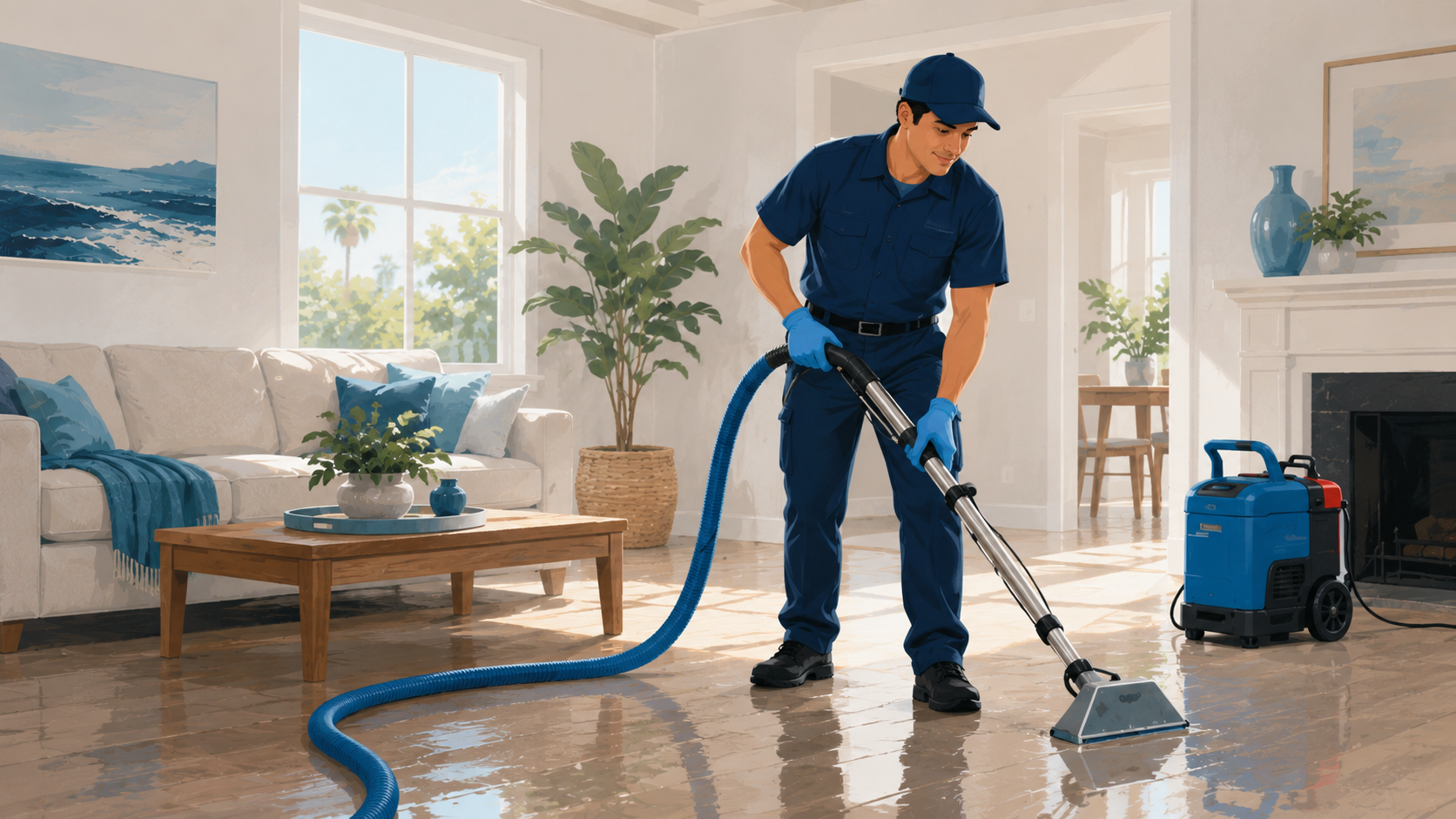
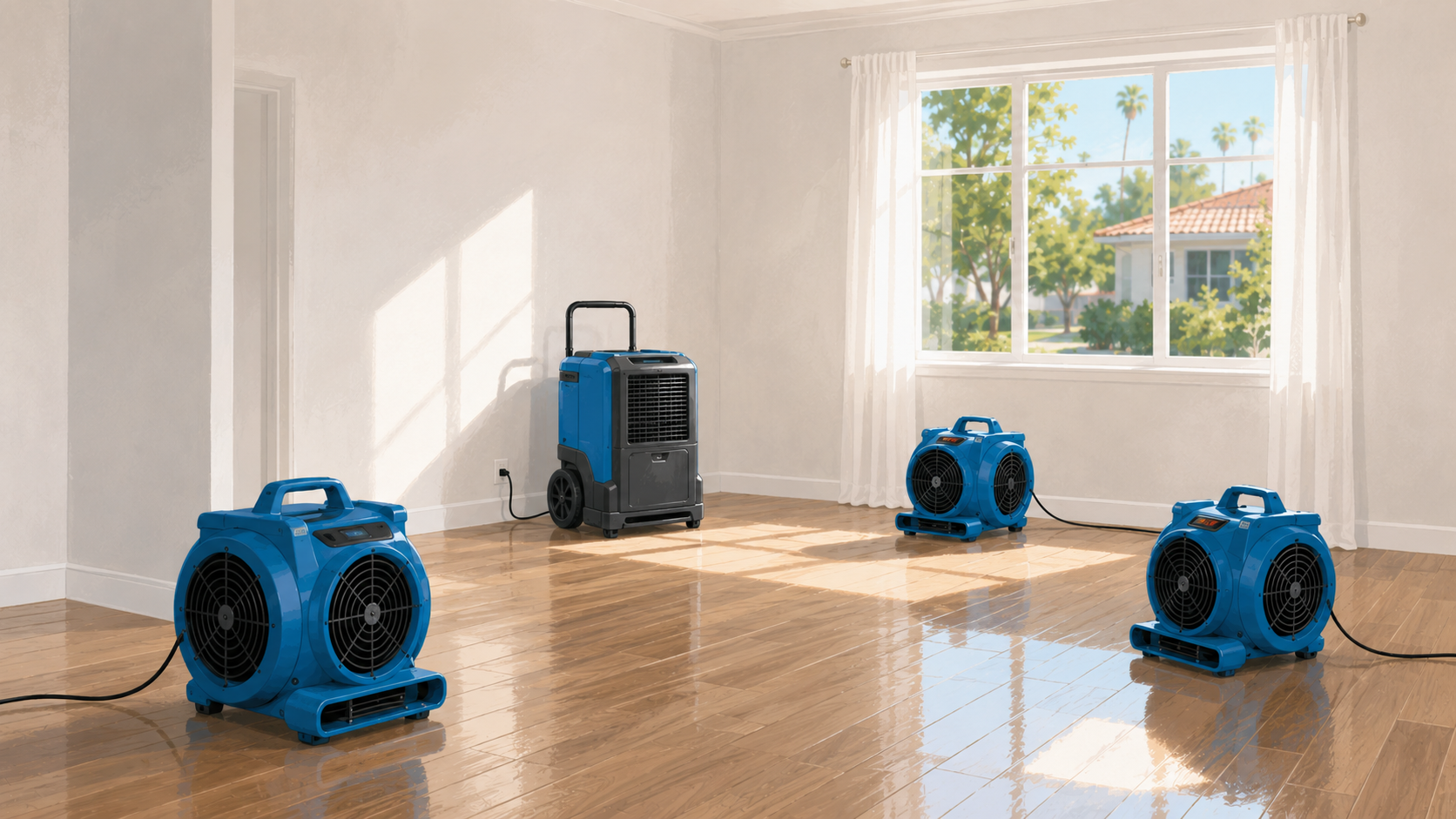
The reason is equipment and know how. A trained crew shows up with truck mounted extractors, commercial air movers, and dehumidifiers that pull far more moisture than a household fan ever could. They find the hidden water, dry the structure to the right moisture level, and document it so nothing gets missed. Good local companies run 24/7 emergency service, because water doesn’t wait for business hours. Our overview of professional water extraction and drying lays out what that process looks like, and if you want the local picture, see our guide to water damage restoration in Sacramento.
The two questions everyone asks: cost and insurance
Almost every homeowner has the same two fears here. Is this going to cost a fortune, and will my insurance actually pay? Both are fair, and neither has to keep you frozen.
On cost, the honest answer is that it depends on how much water, how far it spread, and how long it sat, which is one more reason moving fast saves money. A reputable local company will assess your situation and explain the scope before any work begins.
On insurance, here’s the part worth knowing. Standard homeowners policies often cover water damage that’s sudden and accidental, like a burst pipe, a failed water heater, or an overflowing appliance. What they typically don’t cover is gradual damage from a leak you left unaddressed, or true flooding from outside water such as heavy storm runoff, which usually needs a separate flood policy. Coverage comes down to your specific policy, so read yours or call your agent. A good restoration team will document everything and work directly with your insurer, which takes a lot of stress off your plate.
Sacramento’s seasons and where the water comes from
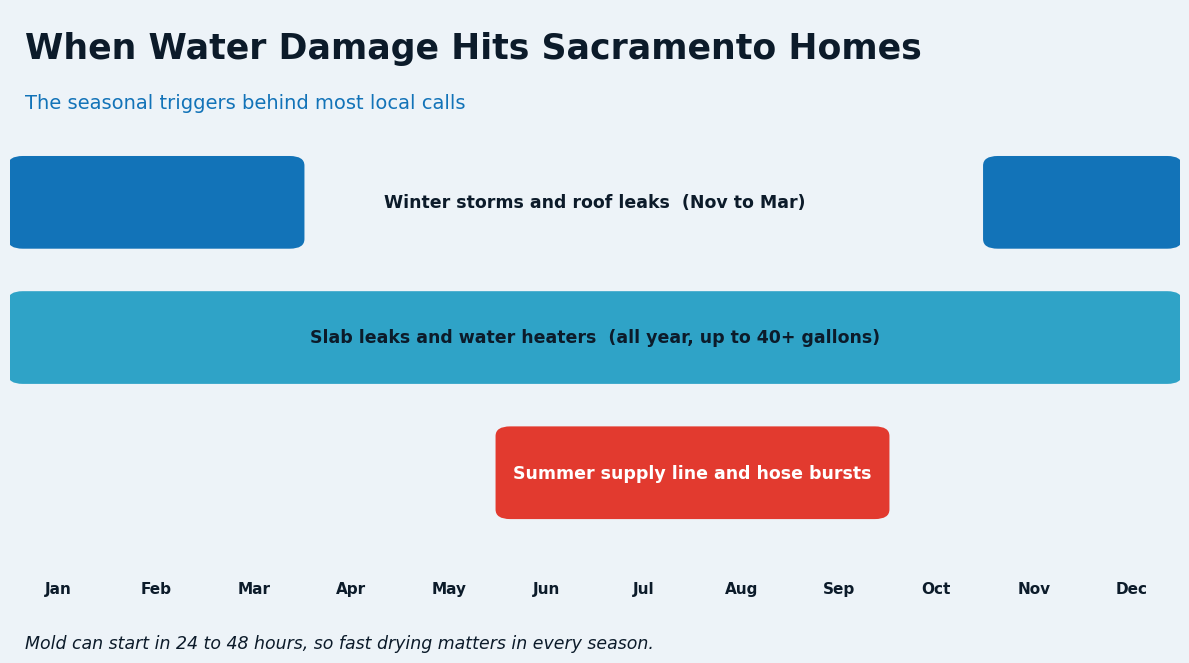
Living here long enough, you learn that water damage in Sacramento runs on a calendar. Knowing the pattern helps.
Winter storms and roof leaks, November through March
When atmospheric rivers park over Northern California, the rain comes hard and sideways. That’s when tired roofs give up, gutters overflow, and water finds its way into ceilings and attics. The February 2024 storms that flooded parts of the region are a reminder that our wet season is short but intense.
Slab leaks and water heaters, all year
Because so many homes here sit on a slab, a pinhole leak under the concrete can run for weeks before you notice a warm spot on the floor or a spike in your water bill. Aging water heaters fail year round too, often dumping 40 or more gallons into a garage at once. In summer, heat stresses supply lines and appliance hoses, so a washing machine hose that lets go while you’re at work can flood a laundry room fast.
Common mistakes that make it worse
A few honest missteps turn a manageable problem into an expensive one.
- Waiting to see if it dries on its own. It won’t, not deep down, and the delay is what breeds mold.
- Only cleaning the surface. If the drywall and subfloor stay wet, you’ve fixed nothing.
- Tossing damaged items before photographing them. That can weaken your insurance claim.
- Treating dirty water like clean water. Storm runoff and sewage carry bacteria and belong to a pro.
- Running the AC and hoping. Real drying needs commercial air movers aimed at the wet materials.
A real world example
Picture a family in Elk Grove who came home from a weekend away to find the ice maker line had split behind the fridge. Water had run for two days across the kitchen and into the living room carpet. The floor felt only slightly damp, so at first they figured a few towels and a fan would do it.
By the time a crew checked with a moisture meter, the water had wicked a foot up the drywall and soaked the carpet pad across half the room. Because they called quickly and the crew dried the structure properly, they avoided mold and saved most of their flooring. Wait a few more days and that same story usually ends with torn out drywall and a mold remediation bill. Speed is the whole game.
Key takeaways
- Safety first: kill the power if water is near it, then stop the water at the source.
- Move fast. Mold can start in 24 to 48 hours, so quick drying saves your home and your budget.
- Treat storm runoff and sewage as contaminated and leave that cleanup to professionals.
- Document everything with photos before you move or throw anything away.
- Homeowners insurance often covers sudden accidental water damage, but coverage depends on your policy.
- When water spread or soaked in, a 24/7 local crew with real drying gear is worth the call.
Frequently asked questions
How fast should I act after water damage?
As fast as you safely can. Stop the water and start drying within hours, because mold can begin to grow in 24 to 48 hours once materials stay wet.
Can I just dry it out myself?
Small clean spills, yes. But if the water was dirty, spread across a room, or soaked into walls and flooring, household fans won’t reach the hidden moisture. That’s when a professional crew makes the difference between a repair and a mold problem.
Will my insurance cover it?
Often, if the damage was sudden and accidental, like a burst pipe or a failed water heater. Gradual leaks and outside flooding are usually treated differently, and flooding typically needs a separate policy. Check your specific policy or ask your agent, and document everything either way.
Getting help now
If your home is wet right now, don’t wait it out. The faster you stop the water and start the drying, the more of your home, your belongings, and your money you’ll keep. A local crew can be on the way for fast 24/7 emergency help, handle the extraction and drying, and work with your insurance so you’re not doing it alone.
WaterDamageOnCall is a water damage information and lead request service. We’re not a licensed restoration contractor, and this article is general information, not professional restoration, insurance, or health advice. Every home and every situation is different, so a licensed local pro should assess yours. If you’re dealing with water damage in the Sacramento area, call for fast 24/7 help or request help through our quick form and we’ll connect you with a local professional.