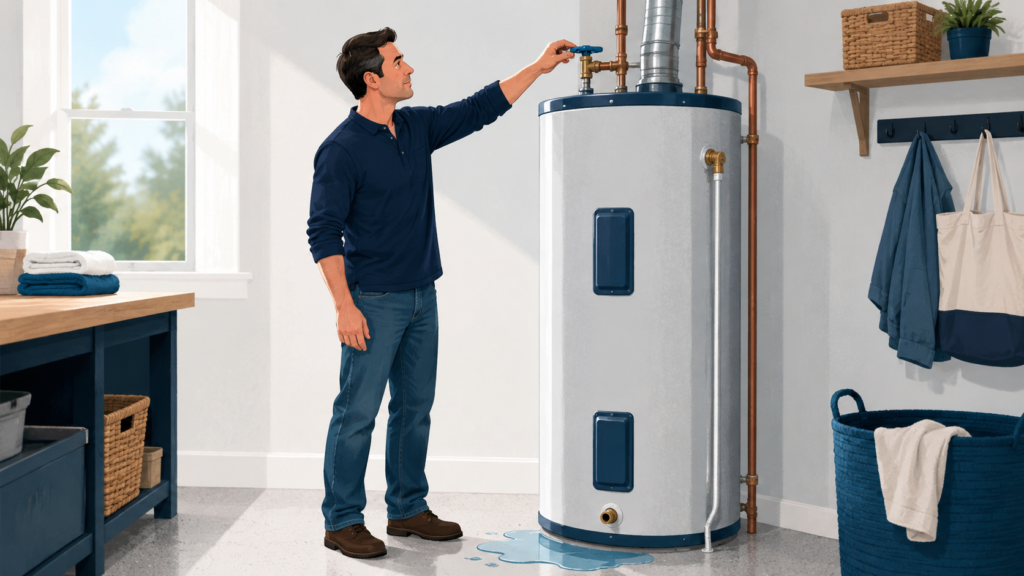
You head into the garage for a box of decorations and the concrete is dark and damp in a wide half circle around the water heater. Nothing burst. Nothing sprayed across the room. It just got wet, quietly, probably for days before anyone looked.
That’s how most of these start. And the good news is that the first ten minutes are almost always the same no matter what caused it: stop the water going in, kill the power to the tank, then figure out where the water is coming from.
A water heater leaking onto a garage slab feels like a minor plumbing headache. The part people get wrong is what happens to the drywall, the subfloor, and the insulation while everyone debates whether to repair or replace.
Shut off the water, then the power
On top of your tank there’s a cold water shut off valve where the supply line comes in. Turn it clockwise until it stops. If it’s a lever style valve, turn it a quarter turn so it sits crossways to the pipe.
If that valve is seized, corroded, or you can’t find it, go straight to the main water shutoff for the house and close that instead. It’s better to lose water to the whole house for an hour than to keep feeding a leak.
Then cut the heat. For an electric unit, flip the breaker labeled water heater at your panel. For a gas unit, turn the control dial to off or pilot. The order matters: turn off the water first, then the power, so you’re not leaving a heating element running in a tank that’s emptying out.
One thing to skip. Don’t drain the tank across a carpeted hallway. If it needs draining, run a hose to a floor drain or outside.
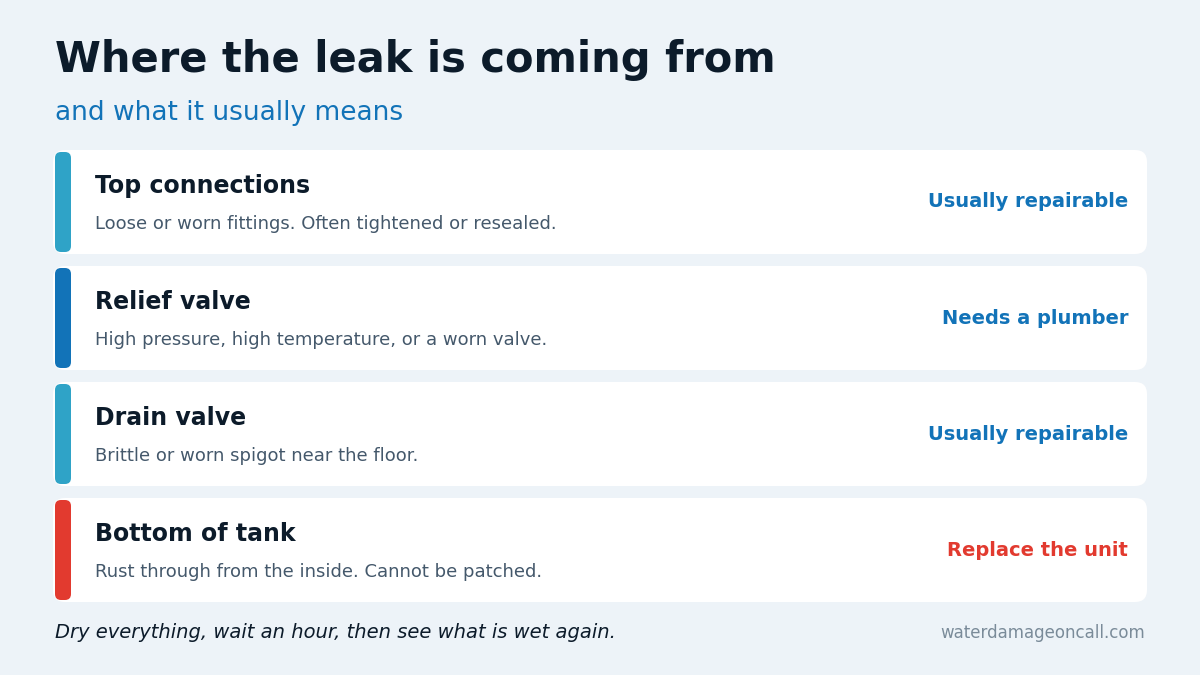
Where the water is actually coming from
Wipe the whole area bone dry, including the top of the tank and every fitting. Lay paper towels around the base and along the pipes above. Come back in an hour and see what’s wet.
Water travels. A drip from a fitting up top runs down the side of the tank and pools at the bottom, which makes a cheap fix look like a dead heater. That hour of patience saves people real money.
The top connections
The cold inlet and hot outlet fittings loosen over years of heating and cooling. This is the friendliest version of the problem, and a plumber can often tighten or reseal it in one short visit.
The relief valve
Every tank has a temperature and pressure relief valve with a pipe running down toward the floor. It’s a safety device, and it’s supposed to let water out if pressure or heat climbs too high.
A brief drip during a heating cycle can be normal. A steady trickle is not. Ongoing discharge usually points to water pressure that’s too high, a thermostat set too hot, or a valve that’s worn out, and that’s a plumber’s call rather than a wait and see.
The drain valve
The spigot near the floor is used to flush sediment. The plastic ones get brittle and weep. Replacing one is routine work.
The bottom of the tank
If everything above is dry and water keeps showing up underneath, you’re likely looking at the tank itself. That’s the one nobody wants, and it’s the one you can’t put off.
Water heater leaking from the bottom is a countdown
Inside every steel tank is a sacrificial anode rod that corrodes so the tank doesn’t. Once that rod is spent, the tank starts rusting from the inside out. Sediment sitting on the bottom makes it worse by trapping heat against the metal.
When rust finally opens a pinhole, a leaking tank can’t be patched. No sealant, no weld, no clamp. The unit gets replaced.
The urgency is simple math. A typical residential tank holds 40 to 50 gallons, and a pinhole today can become a split seam tomorrow. If that happens while you’re at work, all of it ends up on the floor with the supply line still feeding it.
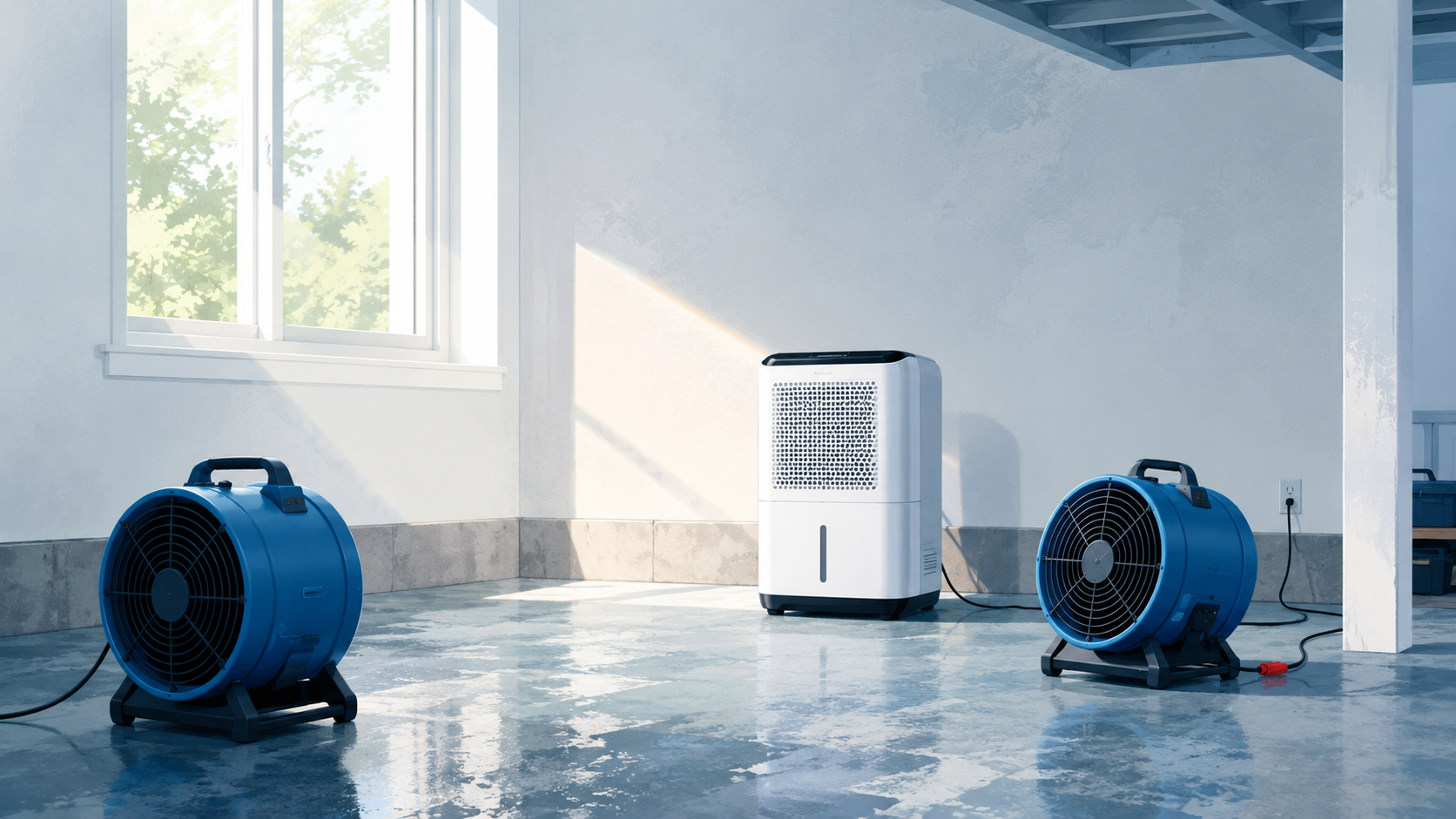
The wet part you can’t see
Here’s where a plumbing problem turns into a restoration problem. Water goes sideways and down, into the bottom edge of drywall, under baseboards, along the subfloor, and into wall insulation that holds moisture like a sponge.
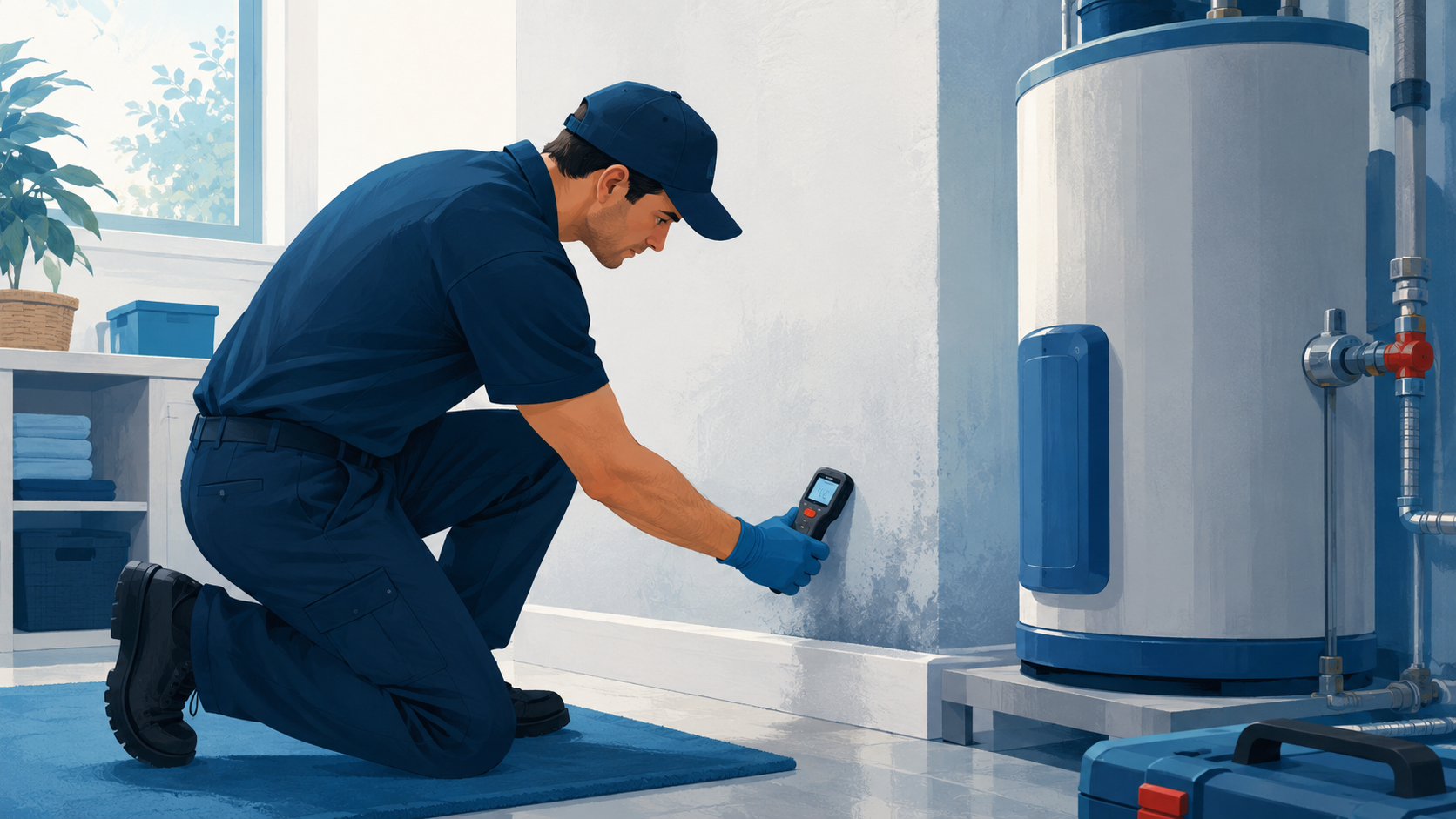
A shop vacuum and a box fan handle the puddle. They don’t touch what’s wicked into the framing. That’s why professional drying pairs air movers with dehumidifiers for several days, with moisture readings taken to confirm materials are dry instead of just feeling dry.
Mold can start within 24 to 48 hours on damp organic material like paper faced drywall. If your heater sits in a closet, an attic, or against a finished wall, that clock is the reason to move quickly. We walk through the full timeline in our guide on how long it takes mold to grow after water damage.
Repair or replace: how the call usually goes
A water heater leaking from a fitting or a valve is a repair. A tank that’s rusted through is a replacement. Age is the tiebreaker on everything in between.
Most conventional tank heaters are commonly expected to last somewhere around 8 to 12 years, and many manufacturers suggest checking the anode rod every 3 to 5 years. If yours is past a decade and rusting at the base, spending money on it rarely pays off.
Not sure how old it is? The serial number sticker on the side usually encodes the manufacture date, and a plumber can read it in seconds.
What a leak like this really costs you
Real numbers depend on your area, your unit, and how far the water traveled, so treat any figure you read online as a rough starting point and get a local quote.
Three things move the total: a part swap versus a full unit, how much building material got wet, and how long it stayed wet. The first is fixed. The other two are still in your control on day one.
On insurance, the general pattern is worth understanding. Homeowners policies often cover damage that’s sudden and accidental, meaning the wet floors and walls caused by a tank that failed without warning. The appliance itself is commonly excluded, and damage from a slow leak that dripped for months is often denied as a maintenance issue.
Every policy is different, so read yours or call your agent before assuming either way. Our post on whether homeowners insurance covers water damage breaks down the common exclusions in plain language.
Mistakes that turn a small leak into a big claim
Take photos before you clean anything up. Wide shots of the room, close shots of the tank and the wet materials, and a picture of the serial number plate. Adjusters ask, and memory doesn’t count for much.
Then avoid the four that cause the most regret:
- Mopping up the visible water and calling it done. Never wait for a wet wall to dry on its own.
- Putting a bucket under the drip and living with it for weeks. Slow leaks are exactly what insurers refuse to pay for.
- Capping or plugging a relief valve that’s discharging. It’s a safety device and blocking it is dangerous.
- Leaving soaked boxes, carpet padding, and stored cardboard on a wet slab. Those hold moisture and feed mold long after the floor looks fine.
Keeping the next one from surprising you
Water heaters rarely fail without hinting first. Rust colored water, popping or rumbling during heating, and small stains around the base are all early notices.
A drain pan plumbed to a floor drain turns a catastrophe into an inconvenience. Cheap battery leak sensors will catch a water heater leaking at 3am, when the first quarter inch shows up and everyone’s asleep.
Flushing sediment once a year and having the anode rod checked on schedule buys years. And if yours is near the end of its expected life, replacing it on a calm Saturday beats replacing it on a flooded Tuesday.
Key takeaways
- Close the cold water valve on top of the tank, or the main house shutoff, then cut power or gas to the unit.
- Dry everything and wait an hour to find the true source. Top fittings and valves are usually fixable.
- Water pooling under the tank after the top checks out points to tank corrosion, which means replacement.
- The floors, walls, and framing matter more than the appliance. Get them dried properly within a day or two.
- Photograph everything before cleanup, and check your policy rather than assuming what’s covered.

Questions homeowners ask
Can I still use hot water if my water heater is leaking?
If it’s a small drip from a top fitting, you may be fine for a short window while you wait on a plumber. If water is coming from the bottom of the tank, shut the supply off and stop using it. Keeping it running just adds pressure and volume to a failing tank.
How long can a water heater leak before it becomes a real problem?
Less time than most people expect. Damp drywall and wet subfloor can begin growing mold in about a day or two, and a slow leak that runs for weeks often gets treated as a maintenance issue by insurers rather than a covered loss.
Is a little water in the drain pan normal?
Occasional condensation happens, especially on cold mornings with heavy hot water use. Water that keeps returning after you dry the pan isn’t condensation, and it needs tracing to a source.
Do I call a plumber or a restoration company?
Both, and usually in that order. The plumber stops the water and handles the unit. A restoration crew dries the structure and checks moisture behind walls and under flooring so you don’t discover the problem again in six months.
If the floor is already wet, act today
A tank failure is one of the most common ways homes flood, and it’s also one of the most fixable when someone gets moving in the first day. If the water spread past the tank, our burst pipe and appliance leak cleanup page explains what a proper extraction and drying job involves.
WaterDamageOnCall is a water damage information and lead request service. We’re not a licensed restoration contractor, and this article is general information rather than professional restoration, insurance, or health advice. A licensed local pro should assess your specific situation, and your insurer is the only source of truth on your coverage.
Water spreading and not sure who to call? Reach us any hour for fast 24/7 help, or request help through our form and we’ll connect you with a local pro who can be out quickly.