
You press your palm against the wall under the leak, and it gives a little. The paint feels cool, and there’s a faint tide line creeping up from the baseboard. Right about now the question hits you: do you have to rip this whole wall out, or can it dry and go back to normal?
It’s a fair thing to wonder, and the honest answer is that it depends on a few things you can check yourself. The wet drywall repair or replace decision usually comes down to how long the drywall stayed wet, what kind of water touched it, and whether the panel still holds its shape. Some soaked walls dry out fine. Others are past saving even when they look okay. Here’s how to tell the difference.
First, how long was the drywall wet?
Time is the single biggest factor. Drywall is basically a gypsum core wrapped in paper, and that paper is food for mold, so once a wall gets wet, the clock starts.
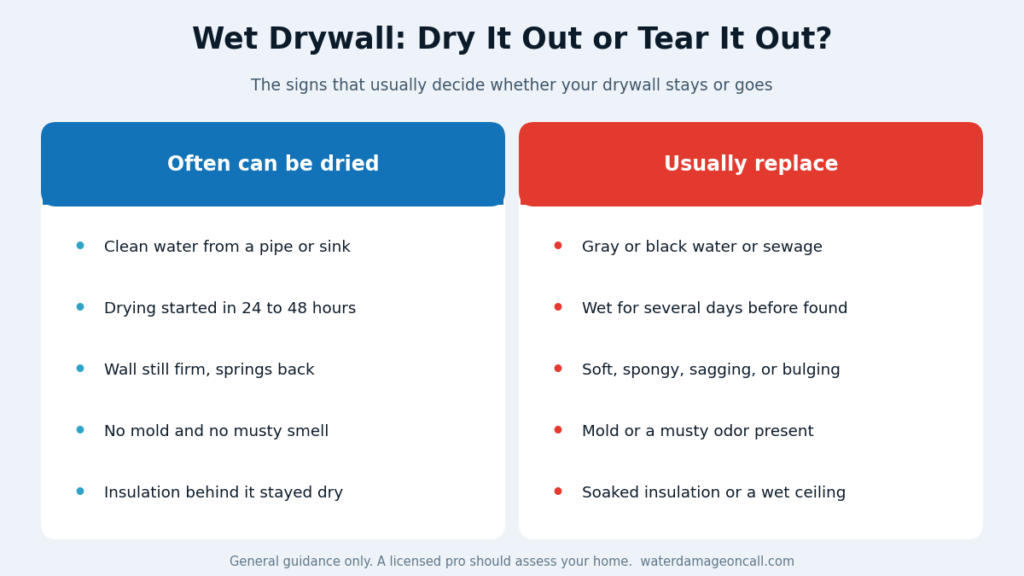
If you caught the water fast and drying started within the first 24 to 48 hours, there’s a real chance the drywall can be saved. That’s the window where clean water hasn’t had time to grow anything or break down the gypsum. Wait longer, and mold can take hold inside the wall cavity where you can’t see it, which changes everything.
So the first thing to pin down isn’t the damage you can see. It’s when the water got in and how fast the area started drying.
What kind of water touched it matters just as much
Not all water is equal. Restoration pros sort it into three broad types, and the type more or less makes the call for you.
Clean water from a supply line, a burst pipe, or an overflowing sink is the best case. Drywall hit by clean water and dried fast is a strong candidate for saving. Gray water from a washing machine, a dishwasher, or a toilet overflow with no solids carries some contamination, so it can sometimes be cleaned and dried, but the bar is higher and pros lean toward replacing it.
Black water is the one with no debate. Sewage, a toilet backup with waste, or floodwater from outside can carry bacteria you don’t want soaking into a porous wall. If black water touched your drywall, it comes out, no matter how sturdy it looks. If you’re not sure which type you have, our guide to the water damage categories 1, 2, and 3 breaks it down.
The wet drywall repair or replace test you can do yourself
Once you know the water was clean and you’re inside that early window, do a quick hands on check to see whether the panel still has its structure or has started to fail.
Press gently on the wall. If it feels firm and springs back, that’s a good sign. If it feels soft, spongy, or mushy, the gypsum core is breaking down and no amount of drying will bring it back. Look for sagging, bulging, or a panel pulling away from the studs, and check the seams, since tape and joint compound let go when saturated. A moisture meter helps here too, reading how much water is still in the wall so you’re not guessing.
The rule of thumb is simple. Firm, clean, and caught early usually means you can dry it. Soft, stained, smelly, or found late usually means replace.
When wet drywall almost always needs to come out
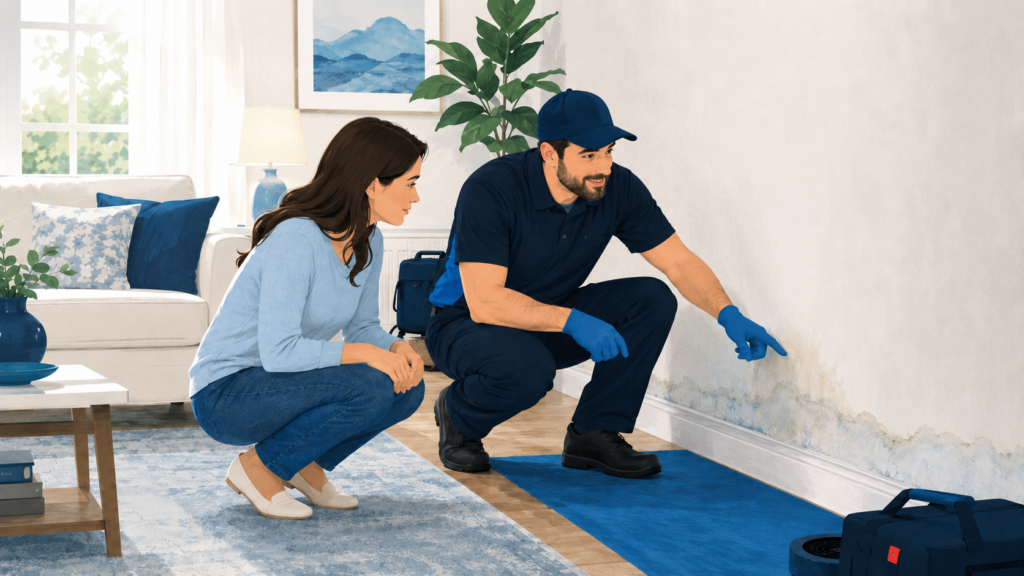
Some situations skip the debate. Plan on replacing the drywall if any of these are true.
- The drywall is sagging, bulging, or crumbling.
- You see or smell mold, especially a musty odor with no visible stain, which often means growth on the hidden back side.
- Gray or black water was involved, including any sewage or outside floodwater.
- The area stayed wet for several days before anyone noticed.
- Insulation behind the wall got soaked, because wet insulation holds moisture against the drywall and dries very slowly.
Mold is the big one. Once it’s growing inside the wall cavity or on the paper backing, cleaning it in place rarely works, and removing the affected drywall is usually faster and more reliable than treating mold you can’t fully reach.
How pros dry drywall in place
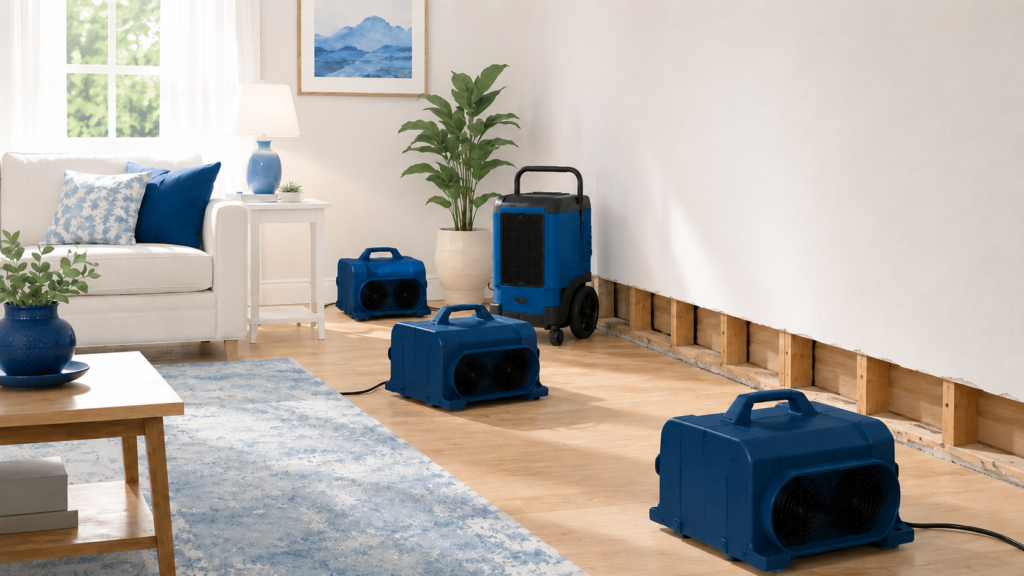
When drywall can be saved, drying it properly is the whole game, and it’s more than pointing a box fan at the wall. The cavity behind the panel has to dry too, or moisture sits trapped and mold grows out of sight. A restoration crew runs air movers across the surface, pairs them with a commercial dehumidifier, and often drills small holes low on the wall or pops the baseboard to force dry air behind the panel.
The real difference between doing it yourself and calling a pro is verification. A pro doesn’t stop when the wall feels dry to the touch. They stop when a moisture meter confirms the drywall and the framing behind it are back to normal. That’s the part household fans can’t tell you, and it’s why walls dried by guesswork so often grow mold weeks later. Our water damage restoration process guide covers the full sequence.
Ceilings are a special case
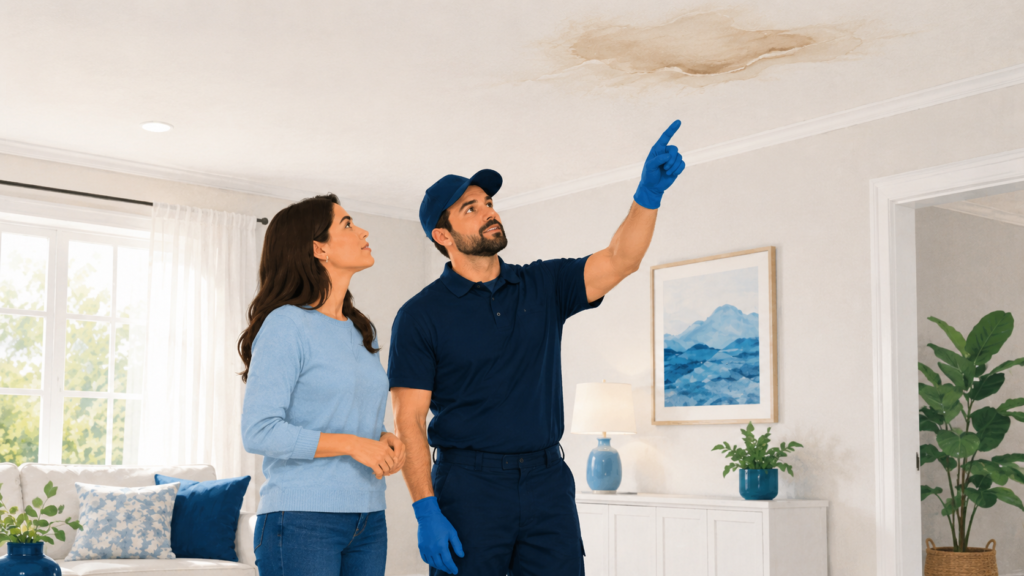
Wet drywall overhead deserves extra caution. A vertical wall can hold together while it’s damp, but a ceiling has gravity working against it. Waterlogged ceiling drywall gets heavy and can sag and fall without much warning, a real safety risk to anyone underneath.
If a section of ceiling is bulging or holding water, keep people and pets out of the room and don’t stand under it. A sagging ceiling almost always comes down rather than dries in place. Our guide on water damage ceiling repair walks through what to check and when to worry.
Does drying or replacing cost more?
Money often drives the wet drywall repair or replace call, so it helps to know that drying salvageable drywall usually costs less than tearing it out and rebuilding, since you skip demolition, materials, taping, and repainting. The faster the wall dries, the more likely it can stay and the smaller the bill.
The trap is waiting. Drywall that could have been dried in the first day or two can turn into a mold problem that forces removal of the wall and everything behind it. Exact numbers vary a lot by the size of the area, the water type, your region, and whether mold is involved, so treat any figure you read online as a rough starting point and get a real assessment. For a fast, no pressure look, you can request help through our form.
Common mistakes that turn a fixable wall into a teardown
- Painting or sealing over it. Fresh paint on damp drywall traps moisture and hides mold that keeps growing underneath, then bubbles and stains come back worse.
- Only drying the surface. The face of the wall can feel bone dry while the cavity behind it is still soaked, so you end up growing mold you won’t see until it spreads.
- Leaving wet insulation in place. Soaked insulation acts like a sponge held against the drywall, so it usually needs to come out.
- Waiting to see if it dries on its own. A day of watching and hoping is a day the mold clock keeps ticking. If you’re unsure, start drying now and decide later.
A real world example
Take Marcus, who found a slow drip from a supply line behind his laundry room wall. He caught it the same afternoon, shut off the water, and pulled the washer out. The lower two feet of drywall were damp but still firm, and the water was clean. Because he moved fast, a crew popped the baseboard, set air movers and a dehumidifier, and dried the wall and cavity in place over three days. The drywall stayed.
His neighbor had a nearly identical leak the year before but didn’t notice for a week. By then the wall was soft, the paper backing had mold, and that section had to be cut out and rebuilt. Same leak, very different outcome, and the only real difference was speed.
What to do next
- Stop the water at the source and shut off the supply if a pipe or fixture is leaking.
- Move furniture and belongings away from the wet wall so they don’t wick up moisture.
- Figure out the water type and roughly how long the area stayed wet, then do the hands on check for softness, sagging, and smell.
- Get drying started right away rather than waiting to decide.
- Call a professional for anything beyond a small clean water spot, especially ceilings, mold, or contaminated water.
When water is soaking into your walls, fast professional water extraction and drying is what tips the odds toward keeping your drywall instead of replacing it.
Key takeaways
- Drywall dried within the first 24 to 48 hours after clean water can often be saved.
- Soft, sagging, moldy, or smelly drywall, and anything touched by gray or black water, should be replaced.
- The cavity behind the wall has to dry too, not just the surface you can see.
- Ceilings that sag or hold water come down for safety rather than dry in place.
- Acting fast usually costs less, since drying beats a full teardown.
Frequently asked questions
How do I know if wet drywall needs to be replaced?
Check three things: how long it was wet, what water touched it, and whether it still holds its shape. Firm drywall hit by clean water and dried within a day or two can often stay. Soft, sagging, moldy, or contaminated drywall should be replaced.
Can wet drywall dry out on its own?
Sometimes, but slowly and unreliably. Open air alone rarely dries the wall cavity fast enough to beat mold, and it can’t confirm the framing behind the panel is dry. Air movers and a dehumidifier, checked with a moisture meter, are the dependable way to dry drywall in place.
How long does it take to dry wet drywall?
With professional air movers and a dehumidifier, many walls dry in about 24 to 72 hours. Relying only on household fans and open windows can take a week or more, which often gives mold enough time to start. A musty smell with no visible stain is a common sign that mold has already begun on the hidden back side.
WaterDamageOnCall is a water damage information and lead request service. We are not a licensed restoration contractor, and this article is general information, not professional restoration, insurance, or health advice. Water damage varies by home, water type, and situation, so a licensed local pro should assess yours directly. If water is in your walls right now, call for fast 24 hour help or request help through our form today.