
You walk across the living room and something feels off underfoot. The boards that used to lie flat now have a gentle wave to them, or the edges feel raised. Maybe the dishwasher let go overnight, or a slow leak under the fridge finally showed itself. Now you’re staring at the floor you saved up for, wondering if it’s ruined.
Here’s the reassuring part. Plenty of water damaged hardwood floors can be saved, and the thing that decides it isn’t luck. It’s how fast the wood gets dried and how clean the water was. Act quickly and you give the floor a real shot. Wait too long and the same floor can go from a repair to a full tear out.
The honest answer on whether hardwood floors survive water
Wood is basically a sponge we finished and nailed down. When water gets in, the fibers swell, and when it dries, they shrink back. Restoration is really just controlling that swelling and shrinking so the boards return to their normal shape without cracking or splitting.
Floors that get professional drying started fast, ideally within the first 24 to 48 hours, have the highest survival rate. Solid oak that’s only starting to cup can often be dried flat again. Two things matter most: how long the wood stayed wet and what kind of water touched it. Clean water caught quickly is the best case, while contaminated water, or clean water left to sit for days, is where floors get lost.
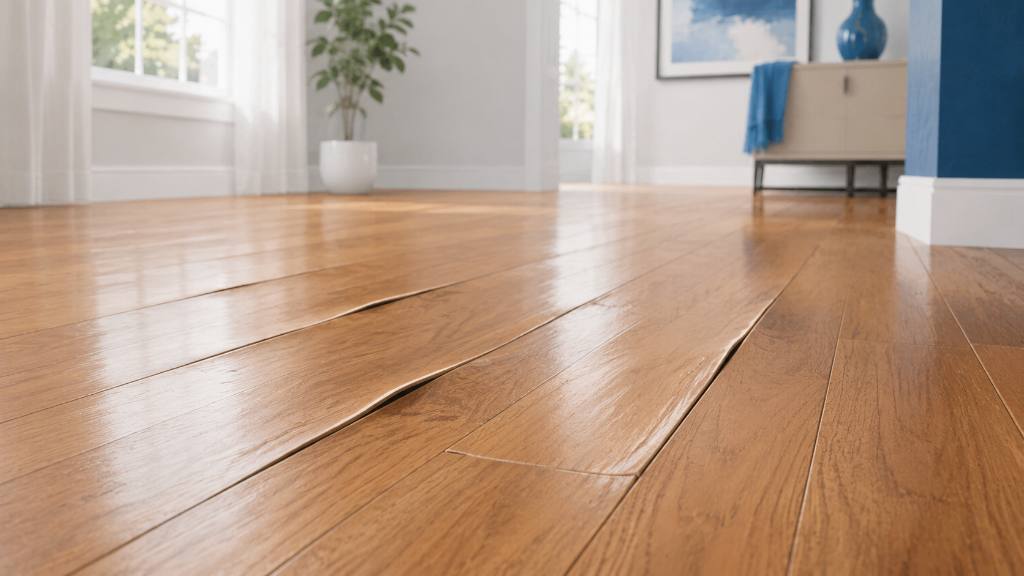
What water actually does to wood: cupping, crowning, and buckling
When someone says a wet floor is “warped,” they usually mean one of three things, and knowing which one tells you a lot about whether the floor can come back.
Cupping
Cupping is the most common and the most hopeful. The edges of each board rise higher than the center, so it takes on a shallow concave shape, like a long soup spoon. It happens when the underside of the wood soaks up more moisture than the top. Once you stop the moisture and dry the boards evenly, cupping can often be reversed, sometimes fully.
Crowning
Crowning is the opposite: the center sits higher than the edges. It usually shows up when a cupped floor got sanded flat before it fully dried. When that half dried wood later releases the rest of its moisture, the edges drop and the middle stands proud. That’s why sanding too early is such a costly mistake.
Buckling
Buckling is the serious one. Whole boards or sections lift and pull away from the subfloor, sometimes by several inches. At that point the flooring has lost its grip on the nails, glue, or subfloor underneath. Once a board has lifted off the deck and cracked or split, that damage is mechanical, and drying can’t undo it. Buckled areas usually need to be replaced.
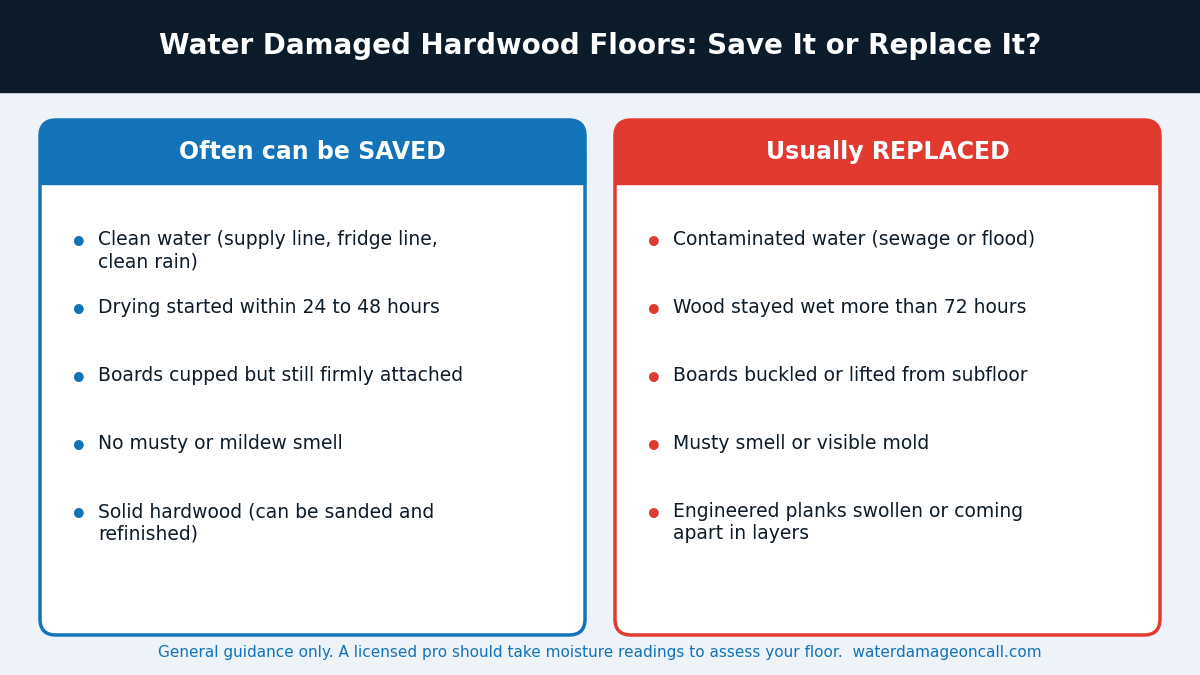
What makes a floor savable versus a teardown
You won’t know for sure until a pro takes moisture readings, but a few honest questions get you close.
Leaning toward savable: the water was clean (a supply line, a fridge line, rain that stayed clean), you caught it within a day or two, the boards are cupped but still firmly attached, and there’s no smell. Solid hardwood in this shape is frequently restored through drying, then sanding and refinishing.
Leaning toward replacement: the water was contaminated (sewage, a toilet overflow past the trap, or floodwater from outside), the floor sat wet for more than about 72 hours, boards have buckled or separated from the subfloor, or you can smell must or mildew. Contaminated water is a hard line. Porous wood that soaks up sewage or floodwater usually can’t be safely cleaned and saved.
Engineered hardwood is its own case. Because it’s a thin wood veneer over plywood, it tolerates less water than solid wood and often can’t be sanded and refinished, so when engineered planks swell or come apart in layers, replacement is more common.
The clock that decides everything
If you remember one thing, make it this: the first day or two decides most of the outcome. Every hour standing water sits, more of it wicks down into the boards and the subfloor, where it’s slowest to leave. Mold can also begin in damp material in as little as 24 to 48 hours, so a floor left wet for days can grow mold underneath even when the surface looks dry. That’s one more way a savable floor slips into replacement territory.
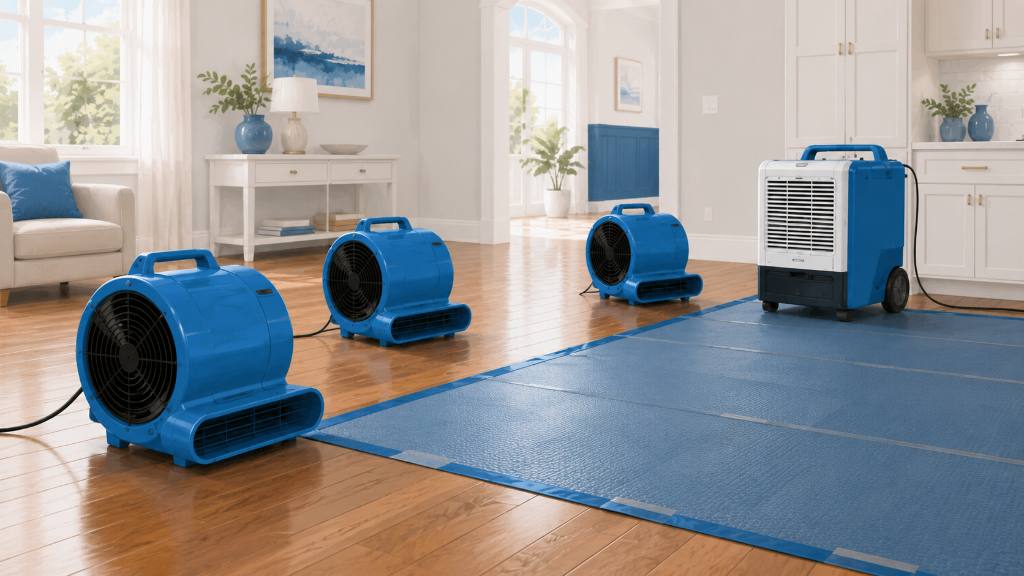
How pros dry water damaged hardwood floors
Drying a wood floor properly takes more than a window and a box fan. The surface can feel dry while the core and the subfloor underneath are still soaked, so crews work the whole assembly, top and bottom, and measure instead of guess. Here’s the process:
- Stop the source, then extract. Drying is pointless while water is still coming in, so the leak gets fixed first, then crews pull surface water off before it soaks down.
- Set up controlled drying. Specialized floor drying systems seal mats to the surface and pull moisture up out of the boards, while air movers and a dehumidifier keep the room’s air dry so the wood keeps releasing water.
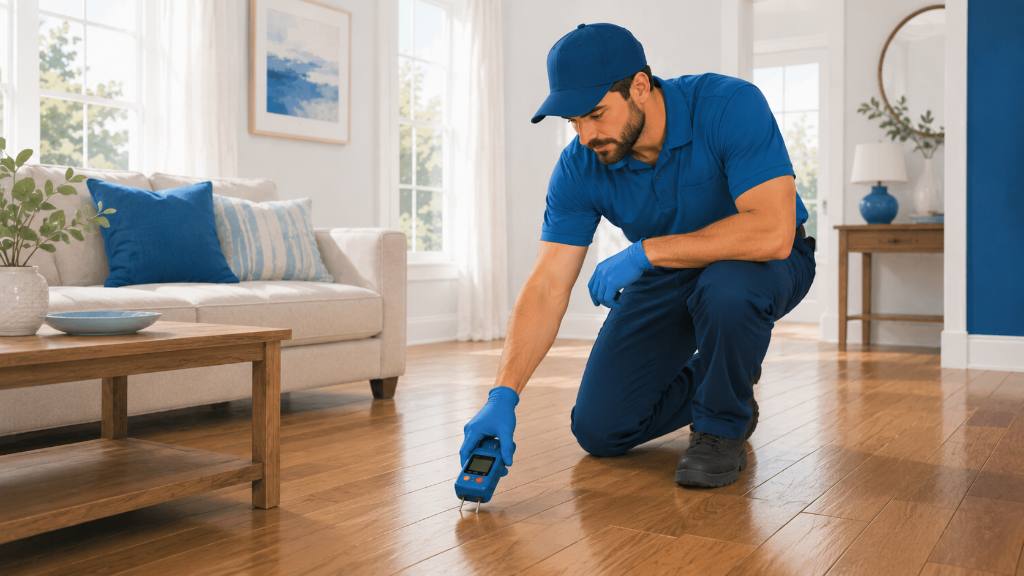
- Measure with a moisture meter. A pro reads the boards and subfloor, often from below, to track how wet the wood really is and when it’s back to a stable, normal level.
- Wait before refinishing. Only once the wood has dried down close to the subfloor around it is it safe to sand and refinish, and even a solid drying job can take one to two weeks. That patience is what keeps a cupped floor from being sanded too soon and turning into a crowned one.
Common mistakes that ruin a floor you could have kept
A savable floor is often lost not to the water itself, but to what happens in the next few days.
- Waiting to see if it dries on its own. Hardwood almost never air dries evenly before mold and deeper warping set in. The wait is what does the damage.
- Blasting it with heat or fast drying. Drying wood too aggressively makes it crack and split. Slow, controlled drying is the whole point.
- Sanding a cupped floor too soon. Sand it before it’s fully dry and you carve off the raised edges, then the middle crowns later. Now you’ve got two problems.
- Ignoring the subfloor. A dry looking surface over a wet subfloor keeps feeding moisture back into the boards and grows mold out of sight.
- Trying to save wood that soaked up dirty water. With sewage or floodwater, the boards aren’t worth the health risk. That’s a replace, not a rescue.
A real world example
Take Marcus, who came downstairs on a Saturday to find water spreading into the oak in his dining room. A supply line behind the fridge had been dripping most of the night, and the boards were already cupping at the edges.
He shut the water off, pulled up the standing water with a wet dry vacuum, and called for help that morning. Because a crew got drying equipment on the floor within hours, the moisture never had time to buckle the boards or reach deep into the subfloor. A couple of weeks of controlled drying brought the cupping down, and a sand and refinish made the room look like nothing had happened.
His neighbor had a similar leak a year earlier and chose to let it dry out and “keep an eye on it.” By the time he accepted the boards weren’t flattening, they’d cupped hard, the subfloor had stayed damp, and there was a musty smell. That floor came out. Same kind of leak, very different bill, and the only real difference was how fast each of them moved.
What to do next
If your hardwood is wet right now, a calm order of operations protects both the floor and any future insurance claim:
- Stop the water at its source if you safely can.
- Get standing water up fast with towels or a wet dry vacuum.
- Take photos and a short video before you change anything, since that matters if you file a claim.
- Don’t sand, refinish, or rip up boards yet. Those calls come after the wood is measured and dried.
- Call a restoration pro quickly, because with hardwood the speed of the response is often the whole ballgame.
On the money side, homeowners insurance often covers sudden and accidental water damage, like a burst pipe or an appliance line that lets go, while slow leaks and outside flooding are commonly excluded. Coverage is never guaranteed and depends on your policy, so report the loss promptly and check your specific coverage rather than assuming.
Key takeaways
- Many water damaged hardwood floors can be saved when drying starts fast, ideally within 24 to 48 hours.
- Cupping is usually reversible, crowning often comes from sanding too early, and buckling usually means replacement.
- Clean water caught quickly is savable. Contaminated water, or wood left wet for days, usually isn’t.
- Proper drying is slow and measured, and refinishing waits until the wood is stable. The fastest way to lose a good floor is to wait and hope it dries on its own.
Frequently asked questions
Can water damaged hardwood floors be repaired, or do they need full replacement?
It depends on how long they were wet and what kind of water it was. Solid hardwood that’s cupped from clean water and dried quickly can often be restored and refinished. Floors that buckled, sat wet for days, or soaked up contaminated water usually need replacing.
How long does it take to dry a hardwood floor after water damage?
Longer than most people expect. Even with professional equipment, drying the boards and subfloor to a stable level commonly takes one to two weeks, and refinishing waits until then. Rushing it is how floors end up cracked or crowned.
Will cupped hardwood floors flatten out by themselves?
Sometimes a little, but rarely all the way, and not reliably. Cupping flattens best with controlled drying that pulls moisture evenly from the boards and subfloor. Left alone, a cupped floor often stays cupped or gets worse.
WaterDamageOnCall is a water damage information and lead request service. We are not a licensed restoration contractor, and this article is general information, not professional restoration, insurance, or health advice. Every home and floor is different, so a licensed local pro should assess your specific situation.
Wet hardwood can’t wait. The faster it’s dried, the more of your floor you keep. Call for 24/7 help or request help through our form, and we’ll connect you with a local pro who can get drying equipment on your floor quickly. You can also read more about professional water extraction and the full restoration process.