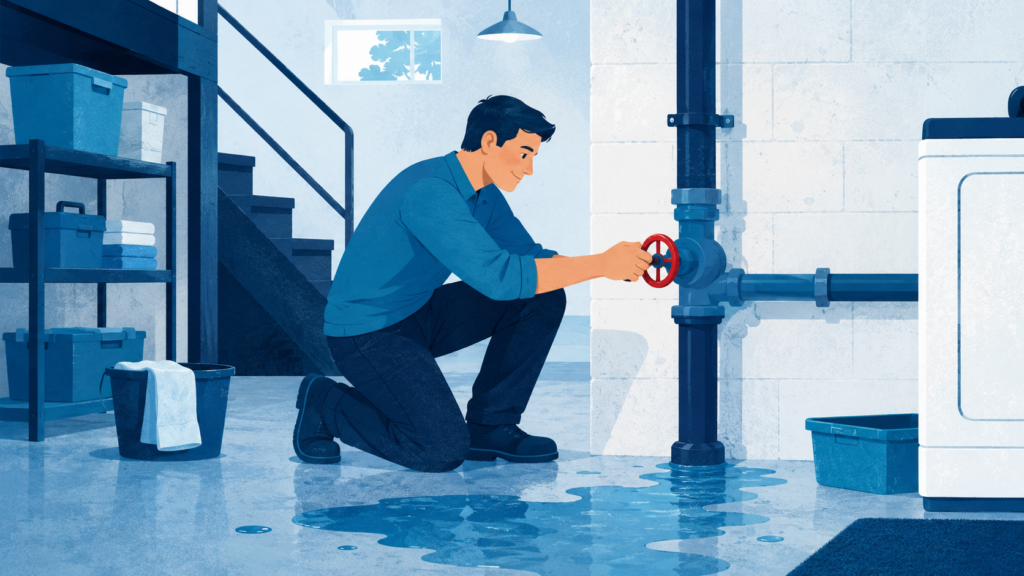
A burst pipe can push a lot of water into your home fast, so the first few minutes really matter. If you can stay calm and move quickly, you can limit the damage and the cost. This guide covers exactly what to do when a pipe bursts, step by step, from shutting off the water to getting help. Whether the pipe is under a sink, in a wall, or in the basement, the order is the same. Stop the water, stay safe, then contain and dry.
What to do when a pipe bursts, in order
Here is the short version. Each step is explained below.
- Shut off your main water supply.
- Open your faucets to drain the pipes.
- Cut the power if water is near outlets or the panel.
- Contain the water and move your belongings.
- Start drying the area.
- Document the damage and call your insurer.
- Call a pro to fix the pipe and dry the structure.
Here is how this plays out in a real home. A homeowner hears water running behind the kitchen wall and finds a pipe has split under the sink, spraying across the floor. Instead of grabbing towels first, she runs to the basement and shuts the main valve, then opens the kitchen and bathroom faucets to drain the lines. With the water stopped, she moves the rug and a box of papers to a dry room and starts mopping. Because she stopped the source in the first two minutes instead of mopping around a running leak, the damage stayed in one room. That order, water first and cleanup second, is the whole game.
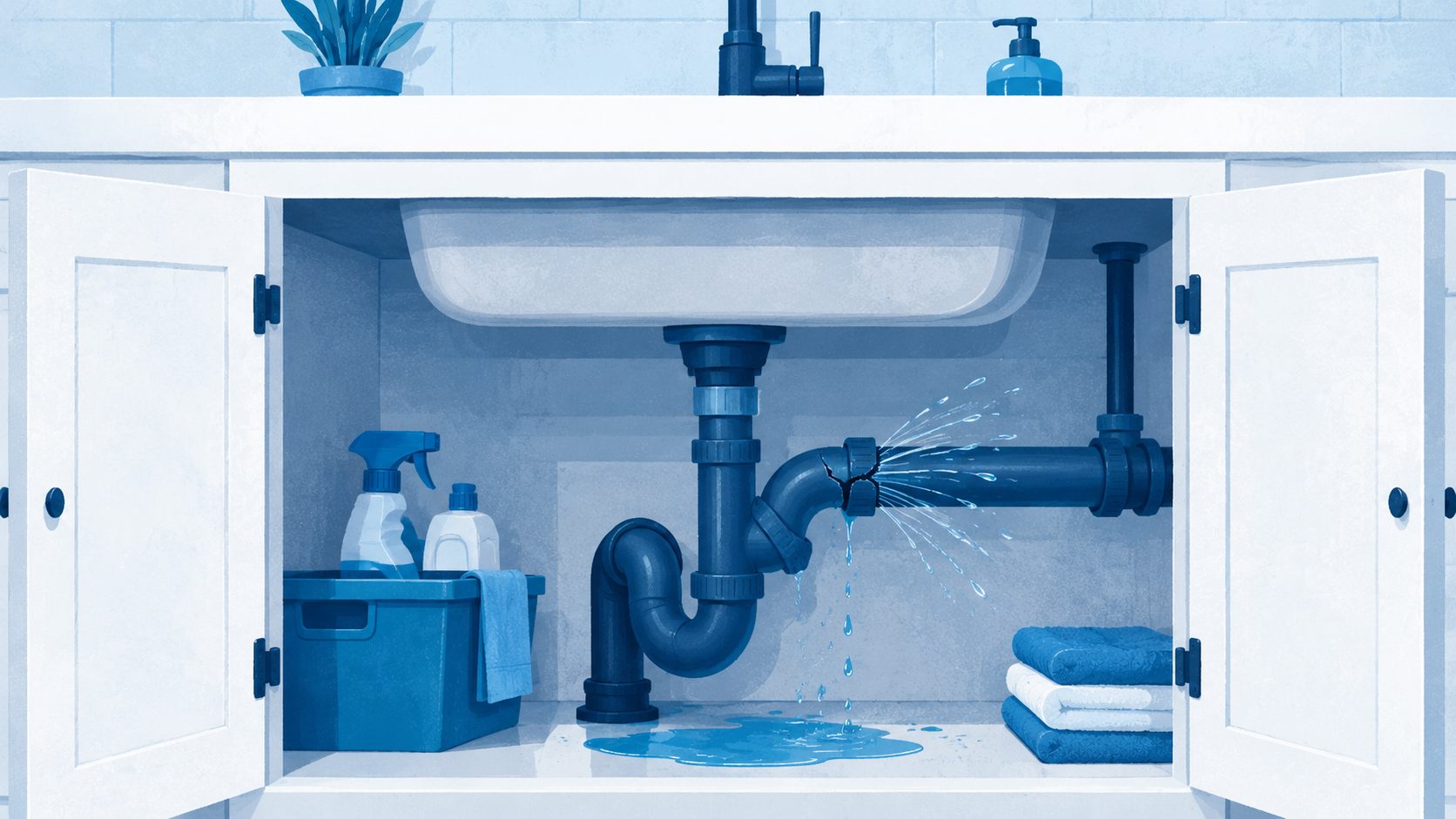
Shut off your water right away
Your first job is to stop more water from coming in. Go straight to your main water shutoff valve. It is usually where the water line enters your home, often in the basement, a crawl space, the garage, or an outside box near the street. A round wheel handle turns off clockwise, and a lever handle turns a quarter turn. It is worth finding yours today, before an emergency, so you are not searching while water is running.
If you cannot reach the main valve or it will not turn, use the local shutoff for the fixture nearest the leak. Sinks, toilets, and water heaters usually have their own small valve you can close to stop water to that spot.
Open the faucets to drain the pipes
Once the main supply is off, open the faucets around your home, both cold and hot. This drains the water still sitting in the pipes and relieves the pressure, which slows the leak from the burst section while you deal with the mess. Flush the toilets once too. This quick step is easy to forget, and it makes a real difference.
Cut the power if water is near it
Water and electricity do not mix. If water has reached outlets, cords, appliances, or your electrical panel, do not wade in. Shut off the power to the affected area at the breaker if you can reach the panel safely and dry. If you cannot get to the panel without stepping into the water, stay out and call an electrician or your utility. Your safety comes before any belongings.
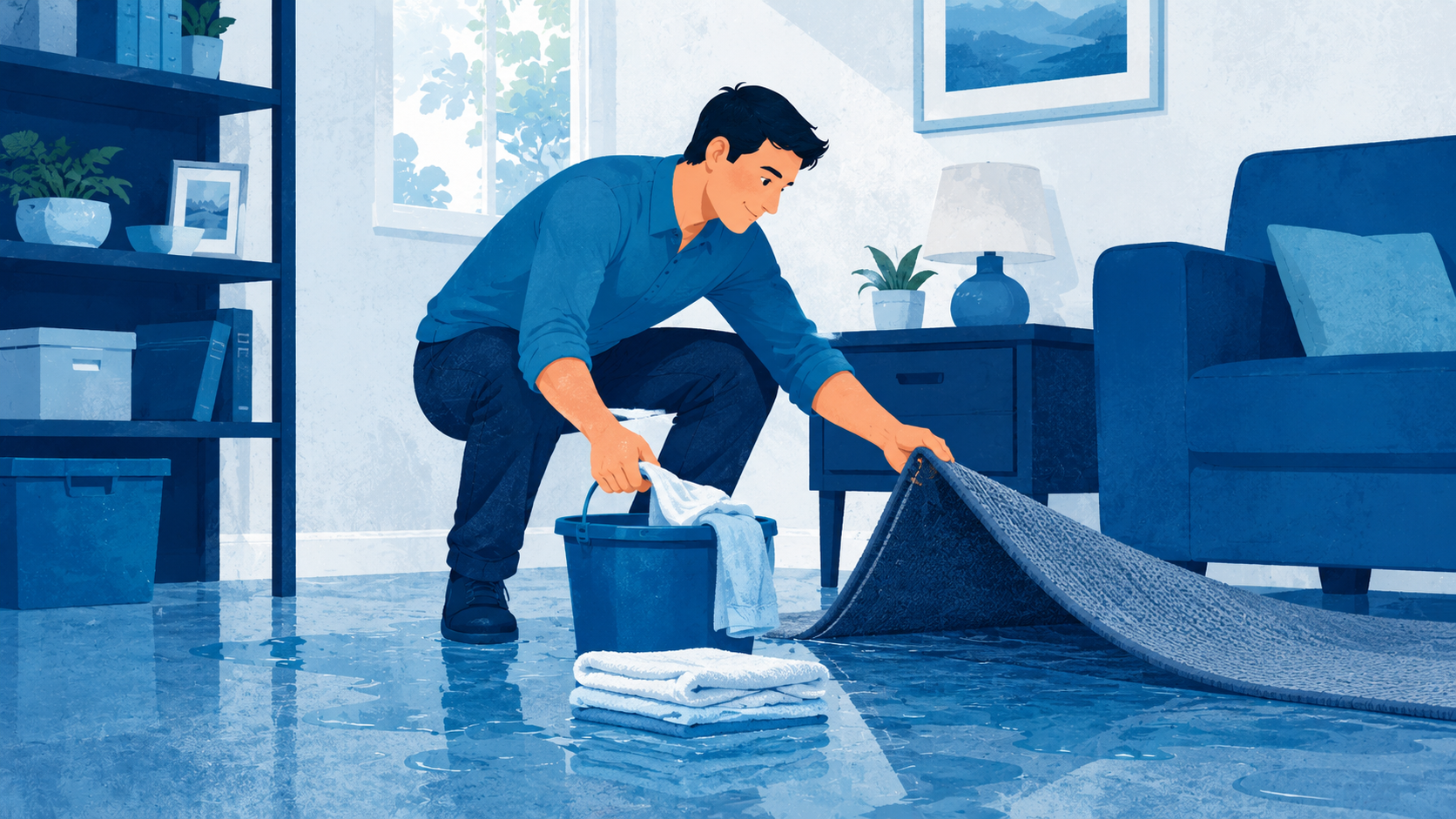
Contain the water and protect your things
With the water shut off, you have a short window to limit the damage. Use towels, buckets, and a mop to catch and soak up what you can. Move rugs, furniture, electronics, and anything valuable off the wet floor and into a dry room. Lift curtains and cords off the floor. If water is dripping from a bulging ceiling, you can poke a small hole at the lowest sag over a bucket to let it drain in one spot instead of spreading, but only if you can do it safely.
Start drying the area
The sooner the space dries, the less damage you will have. Open windows if the weather is dry, run fans, and turn on a dehumidifier if you have one. Pull up soaked rugs. Just know that home fans rarely dry the water that soaks into walls, cabinets, and under floors, and that hidden moisture is what leads to mold and warping. A real burst pipe usually needs professional burst pipe cleanup and drying with commercial pumps and dehumidifiers to reach the parts you cannot.
Document the damage and call your insurer
Before you clean everything up, take clear photos and videos of the burst pipe, the standing water, and every damaged item and surface. This record supports your insurance claim, so capture more than you think you need. Then call your insurer, explain what happened, and write down who you spoke with and your claim number.
A sudden burst pipe is often covered by homeowners insurance, while slow leaks that were ignored may not be. Coverage depends on your policy, so let your insurer confirm what applies before you assume anything.
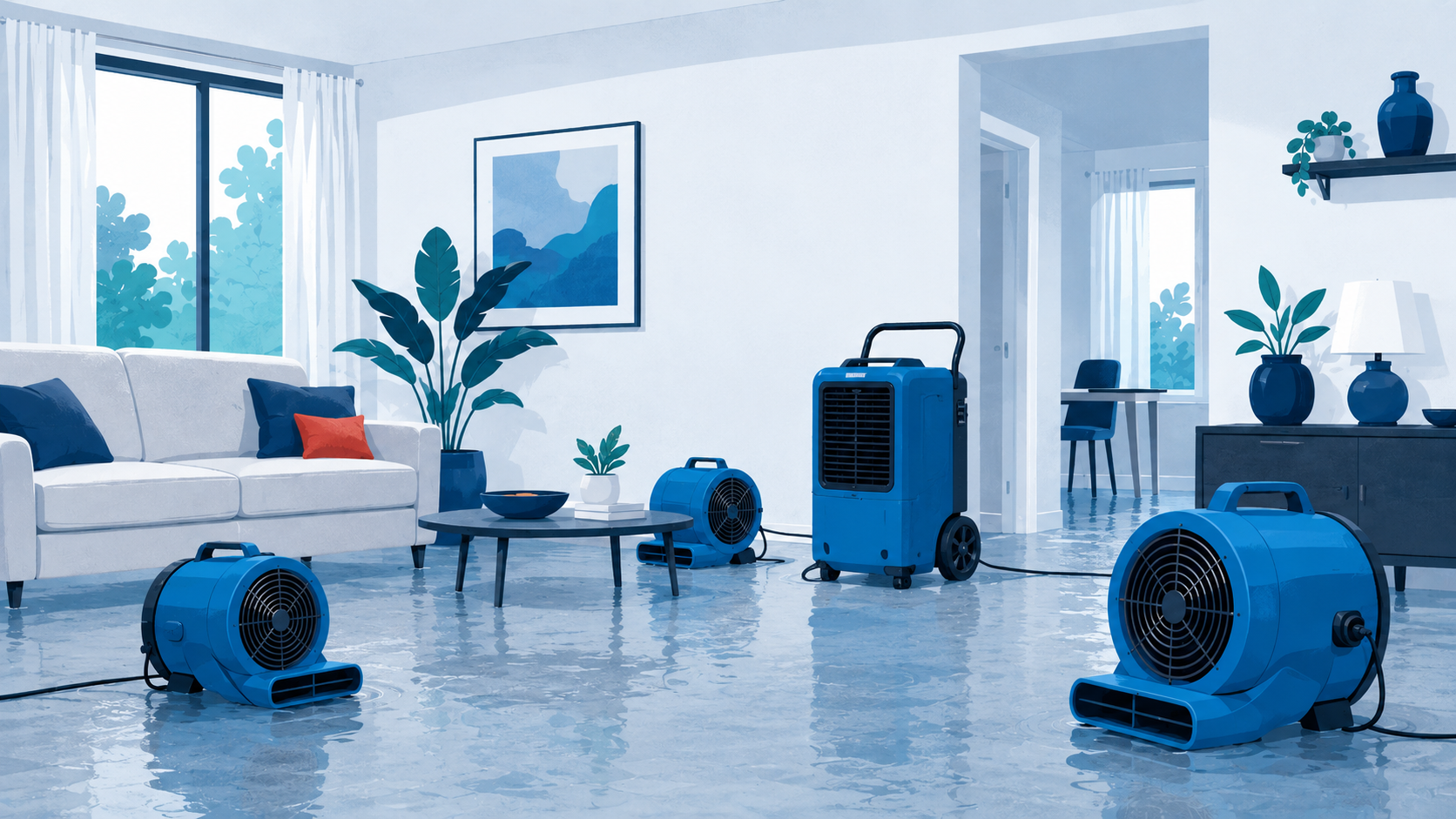
Call a pro and get the pipe fixed
Two things need to happen after a burst pipe. The pipe itself needs repair by a plumber so the source is fixed, and the water damage needs proper cleanup and drying so your home does not grow mold. For anything beyond a small, quickly caught leak, get a restoration pro out fast. You can request help online or call and get connected with a trusted local pro, 24/7. For the bigger picture, see our guide on what to do after water damage.
What makes a pipe burst
Knowing the cause helps you prevent the next one. Common reasons a pipe bursts include:
- Frozen water inside the pipe, which expands and cracks it in cold weather. The American Red Cross has good tips on preventing frozen pipes.
- Old or corroded pipes that weaken over the years.
- Water pressure that is too high for the system.
- A clog that builds pressure behind it.
- Shifting or accidental damage during other home work.
How to prevent the next burst pipe
Once the emergency is over, a few small habits lower the odds of a repeat. In cold weather, keep your home above 55 degrees, let a faucet drip on the coldest nights, and insulate pipes in unheated spaces like garages and crawl spaces. Know where your main shutoff is and make sure it turns freely. If your water pressure feels high, have it checked, since too much pressure stresses pipes and fittings. And if your home has old pipes that have leaked before, it is worth asking a plumber whether it is time to replace them.
Common mistakes to avoid
- Wading into water near outlets before the power is off.
- Waiting to shut off the water while you look for towels. Stop the water first.
- Forgetting to open the faucets to relieve pressure.
- Throwing out damaged items before photographing them for the claim.
- Assuming the walls dried on their own. The hidden moisture is what causes trouble later.
Key takeaways
When a pipe bursts, move fast and in order. Shut off the water, drain the faucets, cut the power if it is near water, contain the leak, and start drying. Photograph everything and call your insurer, then get a plumber to fix the pipe and a restoration pro to dry your home. The faster you act, the smaller the job stays.
Frequently asked questions
What is the very first thing to do when a pipe bursts? Shut off your main water supply. Stopping the water is the single most important step, and everything else follows from there.
Should I turn off the electricity? If water is near outlets, cords, or your panel, yes, shut off the power to that area at the breaker if you can reach it safely. If you cannot get there without stepping into the water, stay out and call an electrician or your utility.
Is a burst pipe covered by insurance? A sudden burst is often covered, while a slow leak that went ignored may not be. Coverage varies, so confirm with your insurer and document the damage.
Can I fix a burst pipe myself? You can stop the water and clean up, but the repair is best left to a licensed plumber, and the drying is best left to a restoration pro so hidden moisture does not turn into mold.
Dealing with a burst pipe right now? Call for fast 24/7 help or request help online and get connected with a trusted local restoration pro who can handle the cleanup.
WaterDamageOnCall is a water damage information and lead request service. We are not a licensed restoration contractor or plumber. This article is general information, not professional restoration, plumbing, insurance, or health advice, and a licensed local pro should assess your specific situation.