
If your basement just flooded, here’s the short version: get everyone away from the water until you know the power is off, stop the water at its source if you safely can, then start moving water out and drying the room fast. A flooded basement gets worse by the hour, so the sooner you act, the more you’ll save. Knowing exactly what to do in those first minutes keeps a bad morning from turning into a mold problem three days later.
Take a breath. You don’t have to fix everything at once. Work through a few steps in the right order, one at a time.
Flooded basement? What to do in the first hour
Before you touch anything, think about electricity. Water and power together are the real danger in a flooded basement. If your electrical panel or any outlets, cords, or appliances are in or near the water, do not step into it.
If you can reach your main breaker without standing in water, shut off power to the basement. If the panel itself sits in the flooded area, stay out and call an electrician or your utility to cut the power. When in doubt, keep your feet dry and wait. No stored box is worth a shock.
Once you’re sure it’s safe to go down, find where the water is coming from. A burst supply line, a failed water heater, or an overflowing washing machine means you should shut off your main water valve right away. If the water is coming up through the floor drain or the walls after heavy rain, the source is groundwater or a storm, and shutting your house valve won’t stop it. Either way, knowing the source tells you what you’re dealing with and how clean or dirty that water is.
Get the standing water out
Standing water keeps soaking into drywall, framing, and anything porous the whole time it sits. Move it out as quickly as you reasonably can.
For a few inches, a wet/dry vacuum or even a mop and bucket will do. For deeper water, a submersible or portable utility pump moves a lot more, a lot faster. Wear rubber boots and gloves the whole time, especially if the water isn’t clean. Drain the water away from your foundation, not back against the house where it can seep in again.
If the water is deep, rising, or you don’t have the gear, that’s a fine moment to call for help. A pro can pull water out of pads and subfloors that a home vacuum can’t reach.
Dry everything fast, because the mold clock is already running
Here’s the part people underestimate. Mold can start to grow on damp drywall, carpet, insulation, and wood within about 24 to 48 hours, and visible colonies often follow within a few days after that. That’s why drying isn’t the step you get to next week. It’s the step you start the same day.
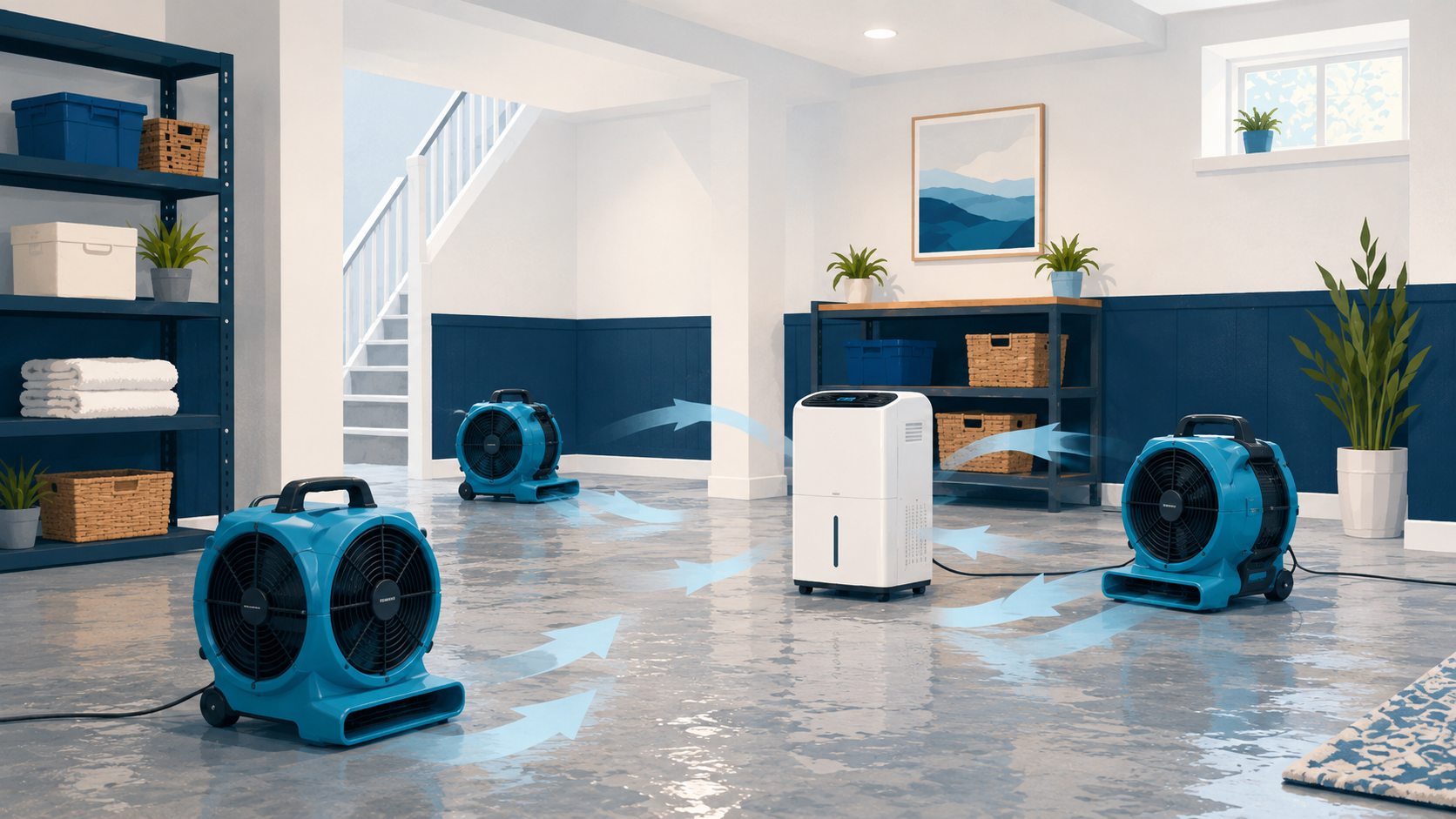
Open windows and doors if the weather is dry. Set up as many fans as you have and aim them across the floor and walls to keep air moving. Run a dehumidifier around the clock, and empty it often or run the drain hose to a floor drain so it never stops working. Pull up soaked rugs, lift furniture off wet carpet, and open cabinet doors so trapped moisture can escape.
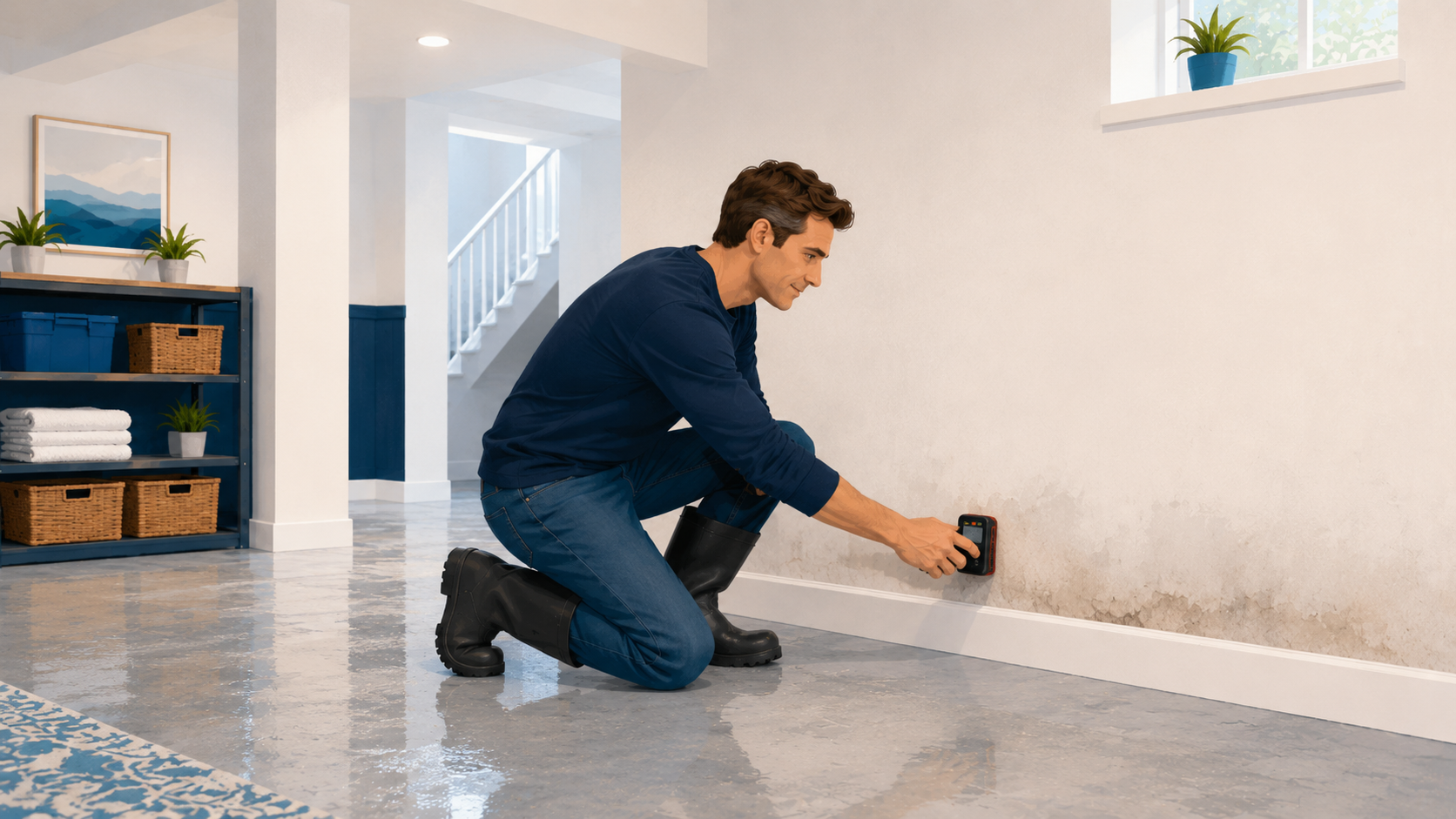
Wet drywall and insulation hold water long after the floor looks dry. If the baseboards feel damp or the wall is soft low down, the material behind it is likely still wet, and that hidden moisture is where mold likes to hide.
Know what kind of water you’re dealing with
Not all basement water is equal, and the type changes what you can keep and what has to go. Restoration pros sort it into three groups.
Clean water comes from a broken supply line. It’s the least risky, though it still causes damage and grows mold if it sits. Gray water carries some contamination, like the discharge from a washing machine or dishwasher, and it can make you sick if you ingest it. Black water is the dangerous one. It includes sewage backups and floodwater from outside, and it can carry bacteria, viruses, and other hazards you can’t see.
Clean water doesn’t stay clean either. Left sitting a couple of days, it can degrade into gray or black water as it mixes with dirt and drywall. That’s another reason speed matters.
If you’re staring at a sewage backup or storm floodwater, treat it as a health hazard and keep kids and pets well away. That’s a job for a professional with the right protective gear. Our basement flooding help page walks through how that cleanup works.

Document everything for your insurance
Before you haul soaked belongings to the curb, get out your phone. Take clear photos and video of the water level, the damaged walls and floor, and every ruined item you can see. Do this as you work, not just at the end, because you can’t recreate the scene once the water is gone.
Then call your insurer to ask what your policy covers. Standard homeowners policies often cover sudden and accidental water damage, like a burst pipe. But damage from groundwater, a natural flood, or a failed sump pump is commonly excluded unless you carry a specific add on, such as water backup coverage or a separate flood policy. Coverage varies a lot by policy and situation, so ask your own insurer rather than assuming, and keep every cleanup and repair receipt.
What to save and what to throw out
It depends on how dirty the water was and how long things stayed wet. Solid, nonporous items like metal shelving, glass, and sealed plastic bins can usually be cleaned and disinfected. Porous things that soaked in gray or black water, like carpet, padding, upholstered furniture, and cardboard, usually have to go, because you can’t fully clean the inside of them.
Drywall and insulation touched by contaminated water almost always need to be cut out and replaced. Sentimental items that got wet with clean water, like photos or documents, are worth drying and salvaging quickly. When you’re unsure, lean toward tossing anything that held dirty water, and let a pro make the call on structural materials.
A real example of how fast this moves
Picture a homeowner who wakes up after a heavy storm to two inches of water across a finished basement. She cuts the power to that level, pulls on boots, and starts a wet/dry vacuum while her partner rents a pump and a dehumidifier. They photograph everything, lift the couch onto blocks, and get three fans running by mid morning.
The carpet and pad were soaked with outside floodwater, so those came out that afternoon. Because they dried the framing fast and had a pro check the walls with a moisture meter, they avoided a mold problem entirely. The neighbor who waited a week wasn’t so lucky. Speed is the whole game.
Common mistakes to avoid
A few missteps turn a manageable flood into an expensive one. Keep these in mind.
- Walking into water before the power is off. This is the mistake that can seriously hurt you. Confirm the electricity is cut first, every time.
- Waiting to dry things out. Every hour of standing water and damp air feeds mold. Don’t put off the fans and dehumidifier.
- Treating dirty water like clean water. Sewage and storm floodwater carry real health risks. Wear protection and keep your family clear.
- Tossing everything before you photograph it. Undocumented damage is hard to claim. Shoot photos and video first.
- Painting or sealing over damp walls. If the material behind the surface is still wet, you’re trapping moisture and hiding a future mold problem.
When to call a professional
You can handle a small, clean water flood yourself if you have the gear and the time. Call a pro when the water is deep or dirty, when it has soaked into walls and subfloors, or when you can’t dry it fast enough on your own. A restoration crew brings commercial extraction, industrial drying, and moisture readings that tell you whether the space is truly dry, not just dry on the surface.
If you’re not sure where your situation falls, it’s fine to ask. You can request help through our form or call for fast 24/7 support, and see what we help with on our services page. For the first moves after any water emergency, our guide on what to do after water damage is a good companion read. You can also review flood safety guidance from Ready.gov.
Key takeaways
- Safety comes first. Never enter a flooded basement until you know the power is off.
- Stop the source if you can, then get standing water out fast.
- Start drying the same day. Mold can begin within 24 to 48 hours.
- Know your water type. Clean, gray, and black water each change what you can keep.
- Photograph everything and ask your own insurer what’s covered, since coverage varies.
Frequently asked questions
How quickly do I need to act after my basement floods?
As fast as you safely can. Water keeps soaking into materials the whole time it sits, and mold can begin growing within about 24 to 48 hours. Getting the water out and the room drying the same day makes a real difference in what you save.
Is a flooded basement covered by homeowners insurance?
Sometimes. A sudden burst pipe is often covered, while groundwater, natural flooding, and sump pump failure are commonly excluded without a specific add on. Coverage depends entirely on your policy, so call your insurer and ask before you assume anything.
Can I clean up a flooded basement myself?
If the water is shallow and clean and you have a vacuum, pump, fans, and a dehumidifier, you can often handle it. Deep water, sewage, storm floodwater, or water that has soaked into walls calls for a professional with the right equipment and protection.
How do I know if the walls are really dry?
You often can’t tell by touch alone, since drywall and insulation hold water behind the surface even when the room feels dry. A moisture meter, which restoration pros use, confirms the material is dry all the way through before you close things back up.
WaterDamageOnCall is a water damage information and lead request service. We are not a licensed restoration contractor, and this article is general information, not professional restoration, insurance, or health advice. Water damage varies by home, insurer, and situation, so a licensed local pro should assess yours. If you’re in the middle of a flooded basement, call for fast 24/7 help or request help through our form and we’ll connect you with a local professional.