
If you’re staring at a soaked floor and wondering what this is going to cost, here’s the short answer. Most homeowners pay somewhere in the low thousands for professional water damage restoration, though a small, clean spill caught fast can run a few hundred, and a large flood that sat for days can climb much higher. The real water damage restoration cost for your home depends on a handful of things you can actually see: how dirty the water is, how much of your home it touched, how deep it soaked in, and how quickly the drying starts.
Take a breath. You don’t need an exact number this second. What helps most is knowing what drives the price, so you can make smart calls and avoid the mistakes that quietly double the bill.
So what does water damage restoration cost?
Nationally, a lot of homeowners land in the rough range of one to six thousand dollars for a typical job, with the middle of the pack sitting around three to four thousand. Those are broad figures, and yours could fall outside them in either direction. Think of them as a starting point, not a quote.
Pros often price the drying and cleanup part by the square foot, commonly a few dollars up to around seven or eight dollars per square foot for extraction, drying, and sanitizing. If your job also needs rebuilding, like new drywall, flooring, or paint, that’s a separate and usually larger line item. The size of the wet area matters more than almost anything else, because more space means more equipment running for more days.
One honest caveat: we don’t set these prices, and no article can name your exact number. Only a local pro who sees the damage can. Here’s how they’ll think about it.

What drives water damage restoration cost up or down
Two homes with the same size leak can get very different bills. Here’s why.
The type of water
Restoration pros sort water into three categories, and the category is one of the biggest cost levers. Clean water from a broken supply line or an overflowing sink is the cheapest to handle, because materials can often be dried in place. Gray water, the kind from a washing machine or dishwasher, carries some contamination and takes more cleaning. Black water, which includes sewage and floodwater, is the most expensive by far, since it’s a health hazard and usually means removing and replacing anything porous it touched.
How much soaked in
It isn’t just the floor area. Pros also look at how deep the water wicked into walls, subfloors, and framing. Water that only wet a bit of carpet dries fast and cheap. Water that climbed up drywall and settled into hardwood or concrete needs more machines and more days, and that time on the meter is where costs add up.
How fast the drying starts
This one is partly in your hands. Mold can start growing on damp materials in as little as 24 to 48 hours. Once mold enters the picture, you’re often looking at remediation on top of drying, which adds real money. Getting extraction and fans going quickly is the single most effective way to keep your bill lower.
What got damaged
Bare concrete and tile shrug off water. Drywall, insulation, carpet padding, cabinets, and hardwood often don’t. The more of those soft, porous materials the water reached, the more you’ll spend replacing them. Hidden damage to insulation or framing behind a wall can also push the number up once a pro opens things to check.
Typical water damage costs by room
Every home is different, but some rooms tend to cost more than others because of what’s in them and where the water goes.
A water stained ceiling is often one of the smaller repairs, frequently a few hundred dollars up to around fifteen hundred, depending on how much has to be cut out and repainted. A bathroom sits in the middle, since tile and fixtures complicate the work. A basement is the wild card. A minor clean water incident in an unfinished basement can be modest, but a sewage backup in a finished basement, with soaked drywall, carpet, and belongings, is one of the priciest jobs a home can face.
The pattern to remember is simple: finished, furnished spaces cost more than bare, empty ones.
Mitigation and repair are two different bills
A lot of sticker shock comes from not knowing there are usually two phases. Mitigation is the emergency part: stopping the water, pulling it out, and drying everything so the damage stops spreading. Repair, or reconstruction, is putting your home back together afterward, like hanging new drywall and laying new floor.
Mitigation is often the smaller of the two. Repair can cost more, especially if a lot of material has to be rebuilt. When you get a number from a company, ask plainly whether it covers only the drying or the rebuild too, so you’re comparing the same thing across quotes.

How insurance changes what you actually pay
Here’s the part that surprises people in a good way and a bad way. The number a restoration company quotes is not always the number you pay. If your homeowners insurance covers the loss, you often pay only your deductible, and the insurer covers the rest.
The catch is that coverage isn’t guaranteed. Homeowners policies commonly cover sudden and accidental water damage, like a pipe that bursts out of nowhere. They commonly exclude gradual problems, like a slow leak you didn’t catch, and they usually exclude outside flooding unless you carry separate flood insurance. Deductibles vary widely too, from a few hundred dollars to a few thousand, and that’s the amount you pay before coverage kicks in.
None of this is a promise about your specific policy. Read yours, or call your agent, and never assume a claim is covered or denied until you’ve confirmed it. If you want a plain walk through of coverage, our guide on what to do in the first 24 hours pairs well with a quick call to your insurer.
A real world example
Picture Marcus, who came home to a burst supply line under his upstairs bathroom sink. Water had run for a few hours, soaking the bathroom floor and dripping through into the kitchen ceiling below. It was clean water, caught the same day.
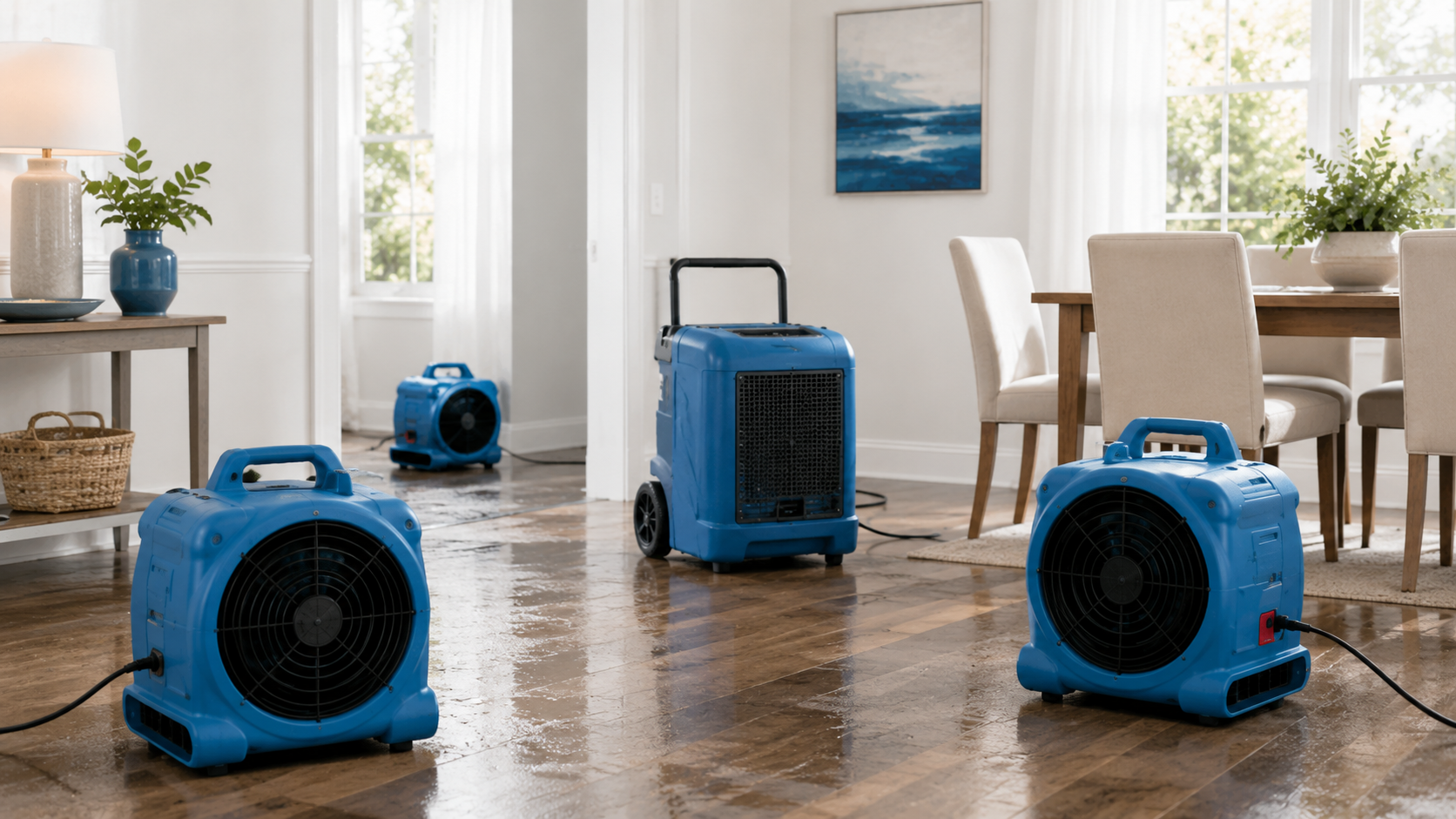
Because he shut the water off fast and called for help right away, a crew extracted the standing water, set fans and a dehumidifier, and dried the cavity before mold could start. His job stayed on the smaller end. Had he waited a couple of days, that same clean water event could have turned into a mold problem and a torn out ceiling, and the cost would have jumped. Speed didn’t just save his home. It saved his wallet.
Common mistakes that make it cost more
A few avoidable missteps quietly inflate the bill more than the water itself does.
- Waiting to act. Every hour wet materials sit, the risk of mold and structural damage grows. Delay is the most expensive choice you can make.
- Assuming a shop vac and a box fan are enough. Surface water hides deeper moisture in walls and subfloors that home tools can’t reach, and leftover moisture becomes mold later.
- Throwing everything out before documenting it. If you’re filing a claim, photos and a list protect your reimbursement.
- Picking a company on price alone. The cheapest quote sometimes skips real drying verification, which leads to a second, bigger job weeks later.
- Not asking what the quote includes. Mitigation only versus full rebuild is the difference that makes two estimates look wildly apart.
What to do next
If water is still active, stop the source if you safely can, and cut power to wet areas only if you can reach the breaker without standing in water. Move what you can to a dry spot. Photograph everything before you clean up, in case you file a claim.
Then get a professional assessment. A reputable restoration pro will measure moisture, explain the category and scope, and give you an itemized estimate you can hand to your insurer. Fast, thorough water extraction and drying is the step that protects both your home and your budget, so don’t let it wait.
Key takeaways
- Most water damage restoration jobs land in the low thousands, but yours depends on the water type, the size and depth of the damage, and how fast drying starts.
- Dirtier water and larger, deeper saturation cost more, and mold from delay is a common budget breaker.
- Mitigation and repair are two separate bills, so always ask which a quote covers.
- Insurance often pays for sudden, accidental damage, leaving you the deductible, but coverage varies, so confirm with your insurer.
- Acting fast is the cheapest thing you can do.
Frequently asked questions
Is water damage restoration worth the cost?
For anything beyond a tiny, quickly dried spill, yes. Professional drying reaches moisture you can’t see and stops mold and rot that would cost far more to fix later. Skipping it usually trades a smaller bill now for a bigger one down the road.
Does homeowners insurance cover the cost?
Often, if the damage was sudden and accidental, like a pipe bursting. Gradual leaks and outside flooding are commonly excluded. Your policy and deductible decide what you actually pay, so check with your insurer before assuming anything.
Why are the price ranges so wide?
Because no two losses are alike. A little clean water on tile and a sewage backup in a finished basement are worlds apart in labor, equipment, disposal, and rebuild. The range only narrows once a pro sees the actual damage.
Can I lower what I pay?
Yes. Act fast to limit spread, document everything for your claim, get more than one itemized estimate, and make sure you’re comparing the same scope. Quick action is the biggest saver of all.
How long does restoration take?
Drying alone often runs a few days, depending on how much material got wet and how deep. Any rebuild happens after that and adds time. A pro can give you a realistic timeline once they measure the moisture.
A quick, honest note before you call
WaterDamageOnCall is a water damage information and lead request service, not a licensed restoration contractor. This article is general information, not professional restoration, insurance, or health advice, and every home is different. A licensed local pro should assess your specific situation and give you a real estimate. If you’re dealing with water right now, you don’t have to figure it out alone. Call for fast 24/7 help or request help through our quick form, and get a clear plan for your home.