
The water is gone. You mopped up the last of it, ran a fan overnight, and the floor feels dry to the touch. So you tell yourself the worst is behind you. Then a worry creeps in: what about mold? You’ve heard it shows up after a leak, and now you wonder if it’s already quietly getting started somewhere you can’t see.
That worry is fair. Mold doesn’t wait for permission, and once building materials get wet and stay wet, the clock starts moving faster than you’d think. So how long for mold to grow after water damage? Under the right conditions, spores can begin taking hold in as little as 24 to 48 hours. That short window is the whole reason restoration pros push so hard to dry everything out fast. Below we’ll walk through what that timeline really looks like, why you often can’t see the problem when it first begins, and what you can do right now to stay ahead of it.
How long for mold to grow after water damage: the 24 to 48 hour rule
Mold is always around us. Its spores float in the air of every home, harmless and invisible, waiting for the one thing they need to wake up: moisture. Give them a damp surface and time, and they colonize.
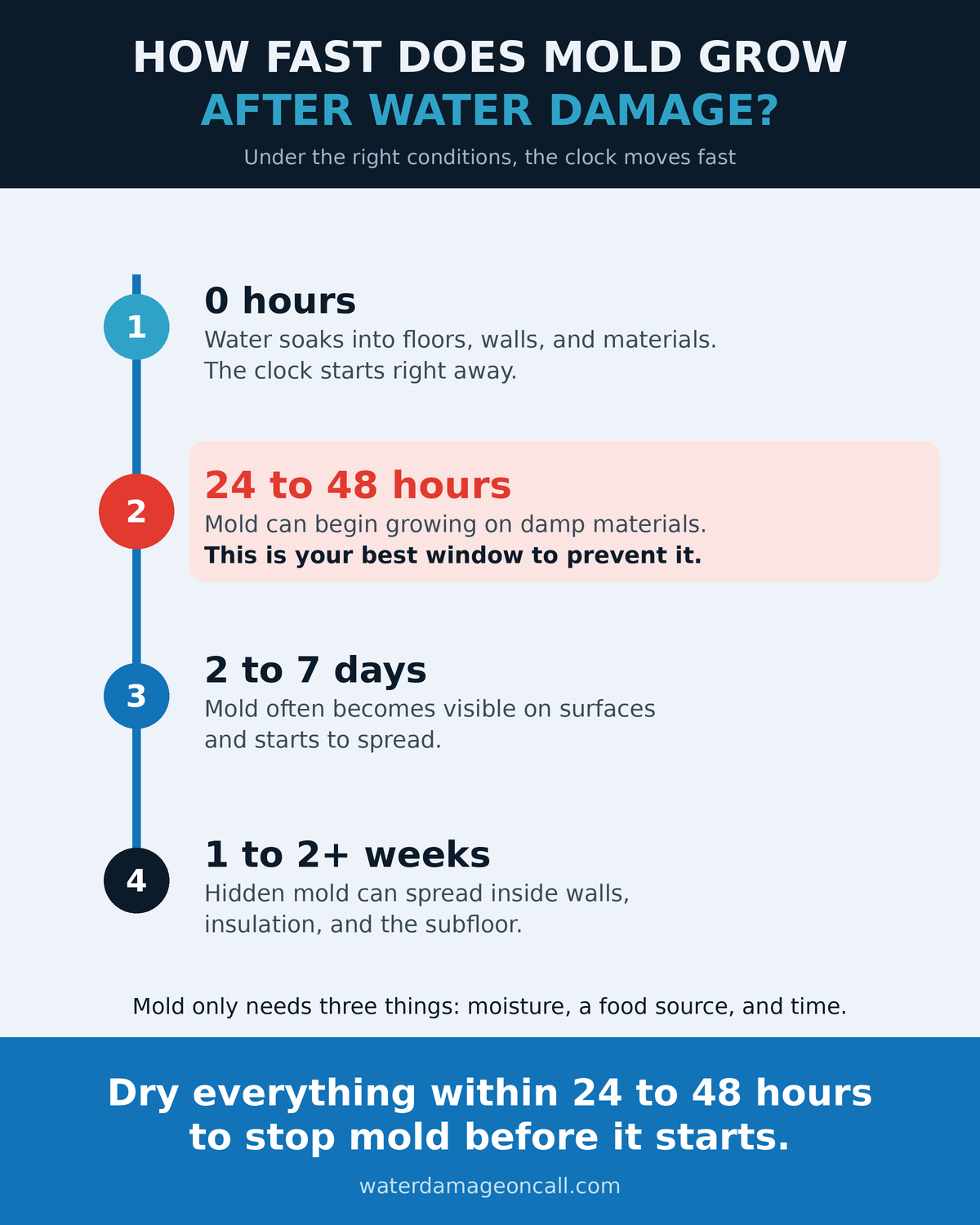
The widely used guideline, backed by the EPA and the restoration industry, is that mold can begin growing on wet materials within 24 to 48 hours. That’s not a guarantee it will, and it’s not a countdown to disaster. It’s a warning that the safe window is short. Dry things out inside that window and you usually prevent growth entirely. Let materials sit wet past it and your odds of a mold problem climb quickly.
Growing and showing are two different things
Here’s what catches people off guard: mold starting to grow and mold becoming visible are two separate events, with a gap between them.
Spores can germinate within a day or two, but you usually won’t see anything for a while longer. Visible patches often take several days to appear, and in hidden spots it can be a couple of weeks before mold is obvious. So a wall that looks clean isn’t necessarily safe. Mold can be actively spreading behind the surface while everything still looks fine out front.
What mold needs to take hold
Mold isn’t picky, which is what makes it a problem after water damage. It needs just three things, and a wet home hands it all three.
- Moisture. This is the trigger. Standing water, damp drywall, a soaked carpet pad, or even lingering high humidity is enough.
- A food source. Mold eats the everyday materials your house is built from. Drywall, wood, carpet, insulation, ceiling tile, cardboard, and dust all work fine as a meal.
- Time. Give it that 24 to 48 hour window on wet material and it gets going.
Notice what’s missing: you can’t remove mold’s food, because your home is made of it. That leaves moisture as the one factor you actually control. Take the water away fast enough and the whole process stalls before it starts. That single idea is the heart of every drying plan.
What makes mold grow faster
The 24 to 48 hour figure is a general guide, not a fixed law. A few conditions speed it up.
Warmth. Mold likes the same temperatures people do. A warm room dries slower and grows mold faster than a cool one, which is part of why summer leaks turn ugly quickly.
Humidity. Damp air keeps materials from drying and gives mold what it wants. The EPA suggests keeping indoor humidity below 60 percent, ideally around 30 to 50 percent. After a leak the room’s humidity can spike, which is why a dehumidifier helps so much.
Dirty water. Clean water from a supply line is one thing. Water from a sewage backup, storm, or drain carries bacteria and organic material that feed mold. The dirtier the water, the shorter your safe window.
Trapped moisture. Water that soaks into wall cavities, under flooring, or inside insulation dries very slowly. Those hidden damp pockets can keep feeding mold for days after the visible surfaces feel dry.
Where mold shows up first
Mold tends to start where water lingers longest and air moves least, which usually means the places you can’t easily see.
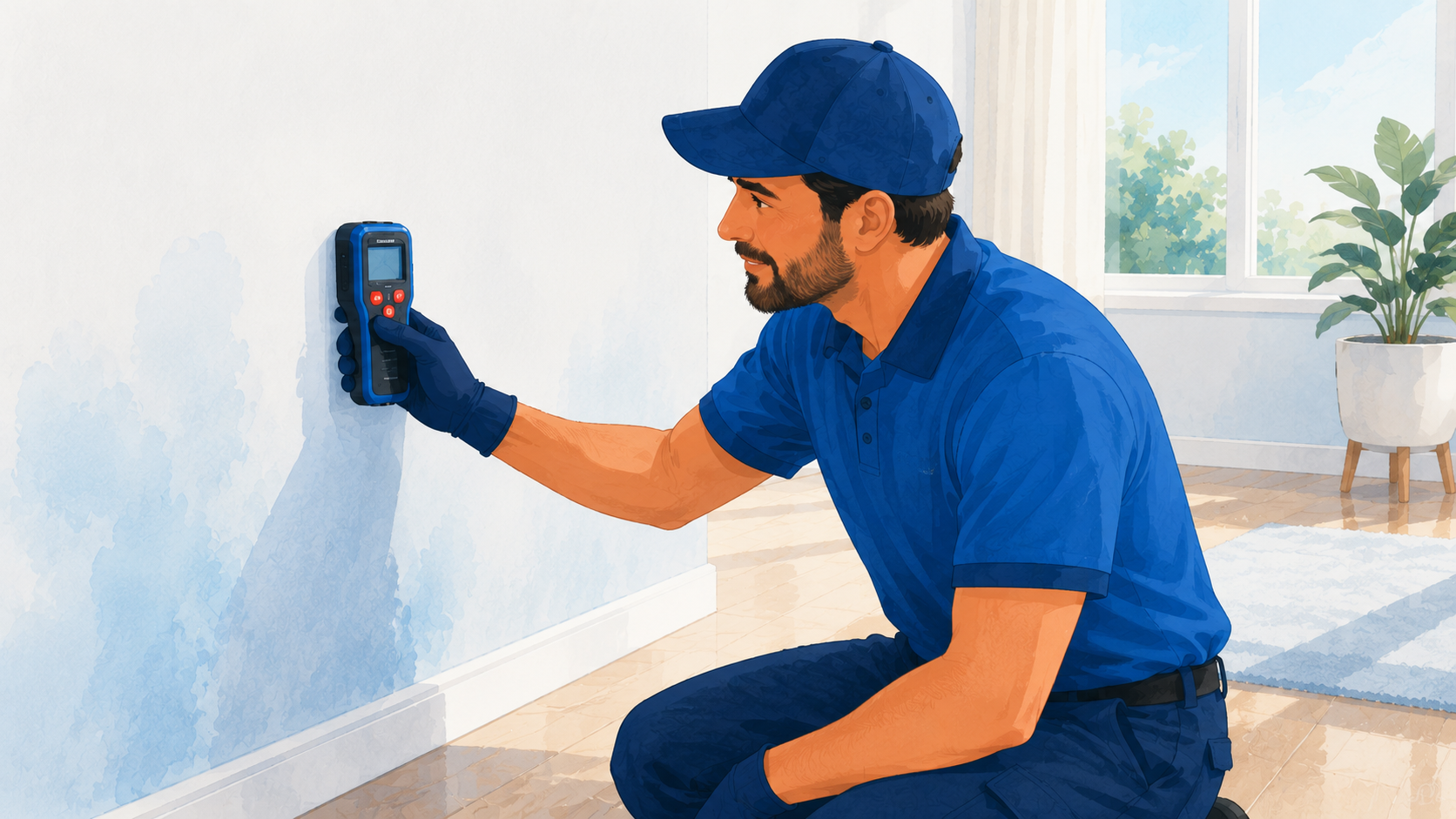
Behind drywall and baseboards, under carpet and the pad beneath it, inside wall insulation, under vinyl or laminate flooring, and along the subfloor are all common early sites. Ceilings soaked from an upstairs leak are another. These spots hold moisture and stay dark and still, exactly what mold prefers. It’s why a surface that looks dry can be hiding a wet, moldy layer underneath. Restoration pros use moisture meters and thermal cameras to find that trapped water, since you can’t detect it through a wall.
How to stop mold before it starts
The good news: mold is preventable, and the steps are straightforward. It comes down to getting things dry fast and completely.
- Stop the water source first, whether that’s shutting off a valve or containing a leak, so you’re not fighting a moving target.
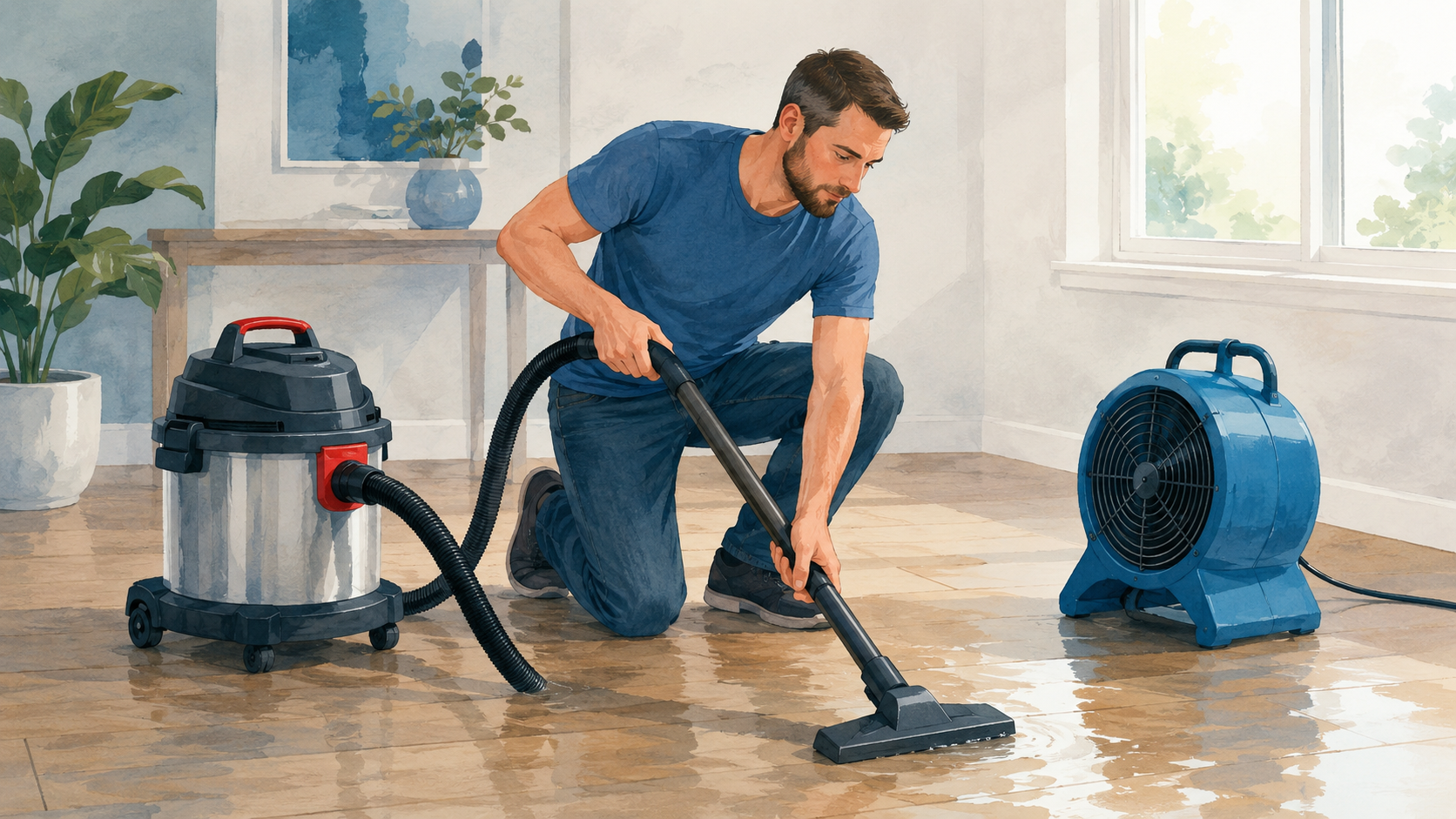
- Remove standing water right away with a wet/dry vacuum, mop, and towels. The less water sitting there, the less has to evaporate.
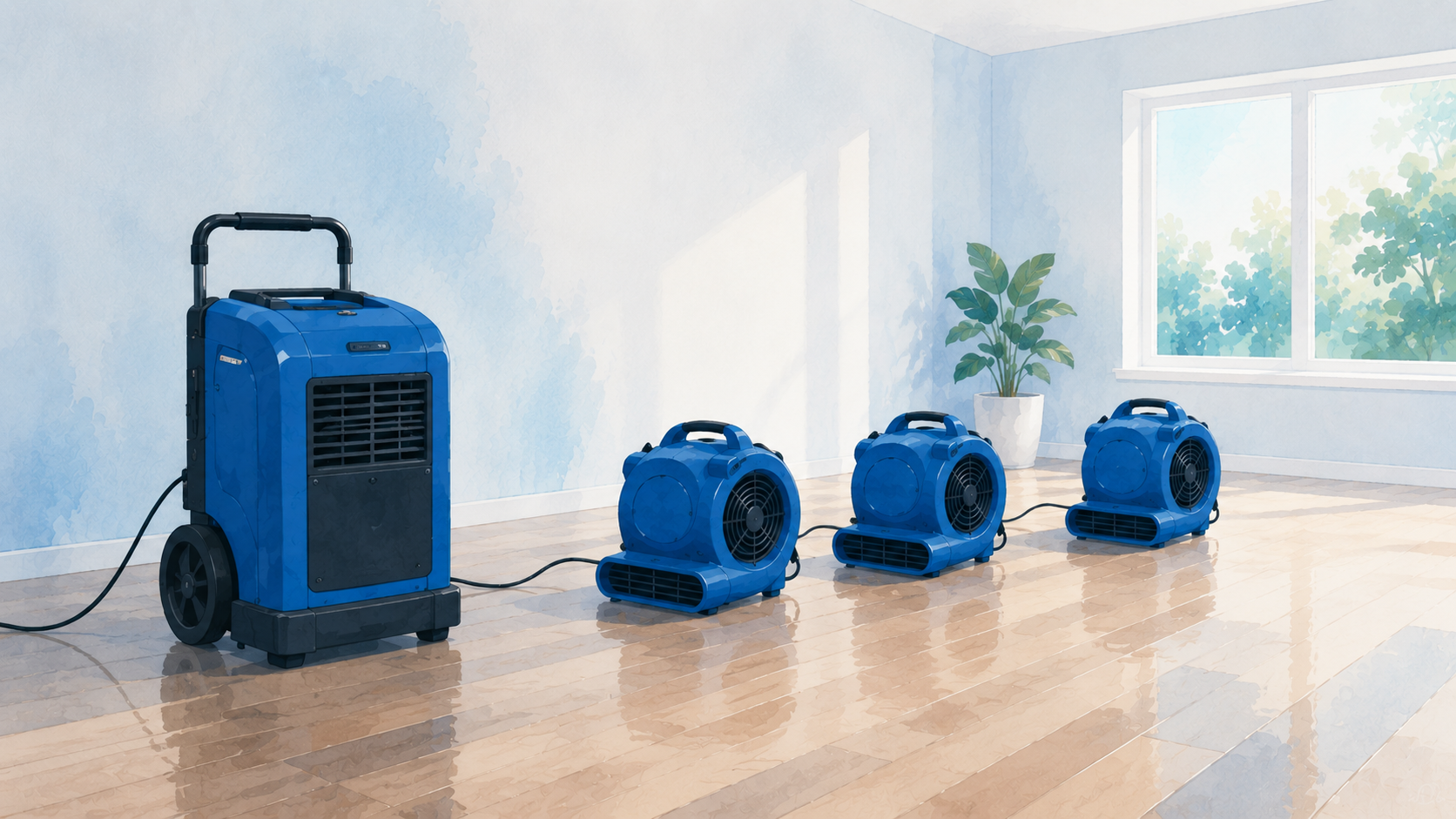
- Move air and pull moisture out. Open windows if it’s dry outside, run fans to keep air moving across wet surfaces, and put a dehumidifier to work to bring the room’s humidity down.
- Pull up what traps water. Soaked carpet padding, wet cardboard, and saturated items hold moisture against the floor and should come out.
- Check the hidden spots. Peek behind baseboards and under flooring where you can, and stay alert for a musty smell over the next few days.
For a small, clean spill you caught early, doing this yourself can be enough. For anything larger, water that soaked into walls, or water that wasn’t clean, this is where a professional earns their keep. A restoration crew has the equipment to dry inside walls and floors and confirm the moisture is truly gone. Our mold remediation service can assess what’s really happening and handle drying and cleanup the right way.
Common mistakes that let mold win
Even careful homeowners lose the race with mold in a few predictable ways.
- Waiting to start. Every hour counts inside that 24 to 48 hour window. Putting off drying until the weekend is how a minor leak becomes a mold job.
- Trusting a dry surface. The top of the carpet or the face of the wall drying out tells you almost nothing about what’s underneath.
- Skipping the dehumidifier. Fans move air, but they don’t pull moisture out of the room. In humid conditions, air movement alone often isn’t enough.
- Leaving wet materials in place. A soaked carpet pad or wet insulation left behind keeps the area damp and gives mold a steady home.
- Painting or sealing over it. Covering a stain doesn’t stop the moisture behind it. Mold keeps growing under fresh paint.
A real world example
Take a homeowner we’ll call Dana. A hose behind her washing machine let go on a Friday while she was at work. She came home to a wet laundry room and a puddle that had crept into the hallway carpet. She mopped it up, felt the carpet dry by Sunday, and figured she’d handled it.
About a week later, a musty smell settled into the hallway. When a technician pulled back the carpet, the pad underneath was still damp and mold had started along the tack strip and the bottom of the drywall. The surface had felt dry the whole time. The water trapped underneath never did. Mopping the surface isn’t the same as drying the structure, and a dehumidifier on that pad from day one would likely have stopped the mold.
What to do next
If you’re dealing with water damage right now, treat the next day or two as the window that matters most. Our guide on what to do in the first 24 hours walks through the drying steps in order. For a small, clean spill caught early, your own effort may be plenty.
If water soaked into walls or floors, if it wasn’t clean, or if you already catch that musty smell, don’t wait it out. The faster a pro dries the hidden moisture, the better your chance of avoiding mold. You can request help through our form or call for fast 24/7 support, and someone can walk you through your situation.
Key takeaways
- Mold can begin growing on wet materials within 24 to 48 hours, so drying fast is your best defense.
- Mold often grows before it’s visible. A clean looking surface can hide active growth underneath.
- Mold needs moisture, a food source, and time. You can’t remove the food, so controlling moisture is everything.
- Warmth, high humidity, dirty water, and trapped moisture all speed things up.
- For anything beyond a small clean spill, a professional can dry the hidden moisture and confirm it’s truly gone.
Frequently asked questions
How long for mold to grow after water damage if the room stays humid?
Faster. High humidity keeps materials damp and gives mold ideal conditions, so growth can happen at the shorter end of that 24 to 48 hour range. Running a dehumidifier to bring humidity down is one of the most effective ways to slow it.
If I dried everything, am I safe from mold?
Usually, yes, if you dried it thoroughly and quickly, including the hidden layers. The catch is that surface drying isn’t the same as structural drying. Water trapped in walls, padding, or subfloor can keep feeding mold even when everything on top feels dry.
What does early mold smell or look like?
Often you smell it before you see it: a musty, earthy odor that wasn’t there before the water. When it becomes visible, it can show up as small spots or fuzzy patches in shades of black, green, gray, or white, frequently near baseboards, ceilings, or damp corners.
Is a little mold something I can clean myself?
A small patch on a hard surface can sometimes be cleaned by a homeowner. But larger areas, mold on porous materials like drywall or carpet, or anyone in the home with breathing issues are all reasons to bring in a professional. For serious or spreading mold, a licensed pro should assess it.
WaterDamageOnCall is a water damage information and lead request service. We are not a licensed restoration contractor, and this article is general information, not professional restoration, insurance, or health advice. Mold and water damage vary by home and situation, so a licensed local pro should assess your specific case. If you need help now, call for fast 24/7 support or request help through our form.