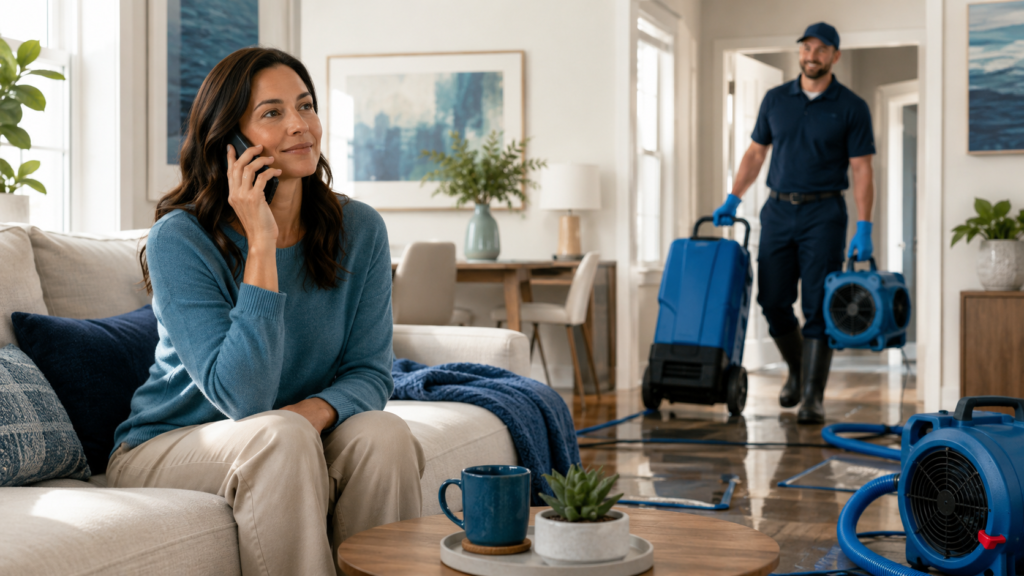
The smell usually hits first. Then you see it: dark water pushing up through a floor drain, a toilet that won’t stop rising, or a soggy patch spreading across the basement carpet. A sewage backup is one of the most stressful things that can happen in a home, partly because it feels so dirty and partly because you’re not sure whether to grab a mop or your phone. Take a breath. The first hour matters more than the mess itself.
A sewage backup isn’t ordinary water. It carries bacteria and viruses that can make people sick, so your safety comes before your stuff. Keep everyone away from it, stop adding water to the system, and get a professional out fast. The rest of this guide walks you through exactly what to do and who to call, step by step, so you’re not guessing while the clock runs.
Why sewage backup cleanup is different from a normal spill
When a clean pipe leaks, you’re dealing with water. When sewage backs up, you’re dealing with what restoration pros call black water, or category 3 water. It’s grossly contaminated and can contain bacteria like E. coli and salmonella, plus viruses and parasites. According to the CDC, sewage carries dozens of pathogens that cause real illness, from stomach bugs to hepatitis A.
That’s why you can’t treat this like a burst supply line. The water itself is the hazard. Even after the visible mess is gone, contaminated moisture soaks into drywall, subfloor, and carpet padding, where it can breed mold and keep releasing that smell. Proper sewage backup cleanup means removing the water, tearing out what can’t be saved, cleaning every hard surface, disinfecting with the right products, and drying the space completely.
People most at risk are kids, older adults, pregnant people, and anyone with a weak immune system or breathing trouble. Keep them out of the area entirely until it’s cleaned and dried.
What to do in the first hour
The steps below protect your health and limit the damage. Do them in order if you can, but use common sense: if something feels unsafe, stop and wait for a pro.
Keep people and pets away
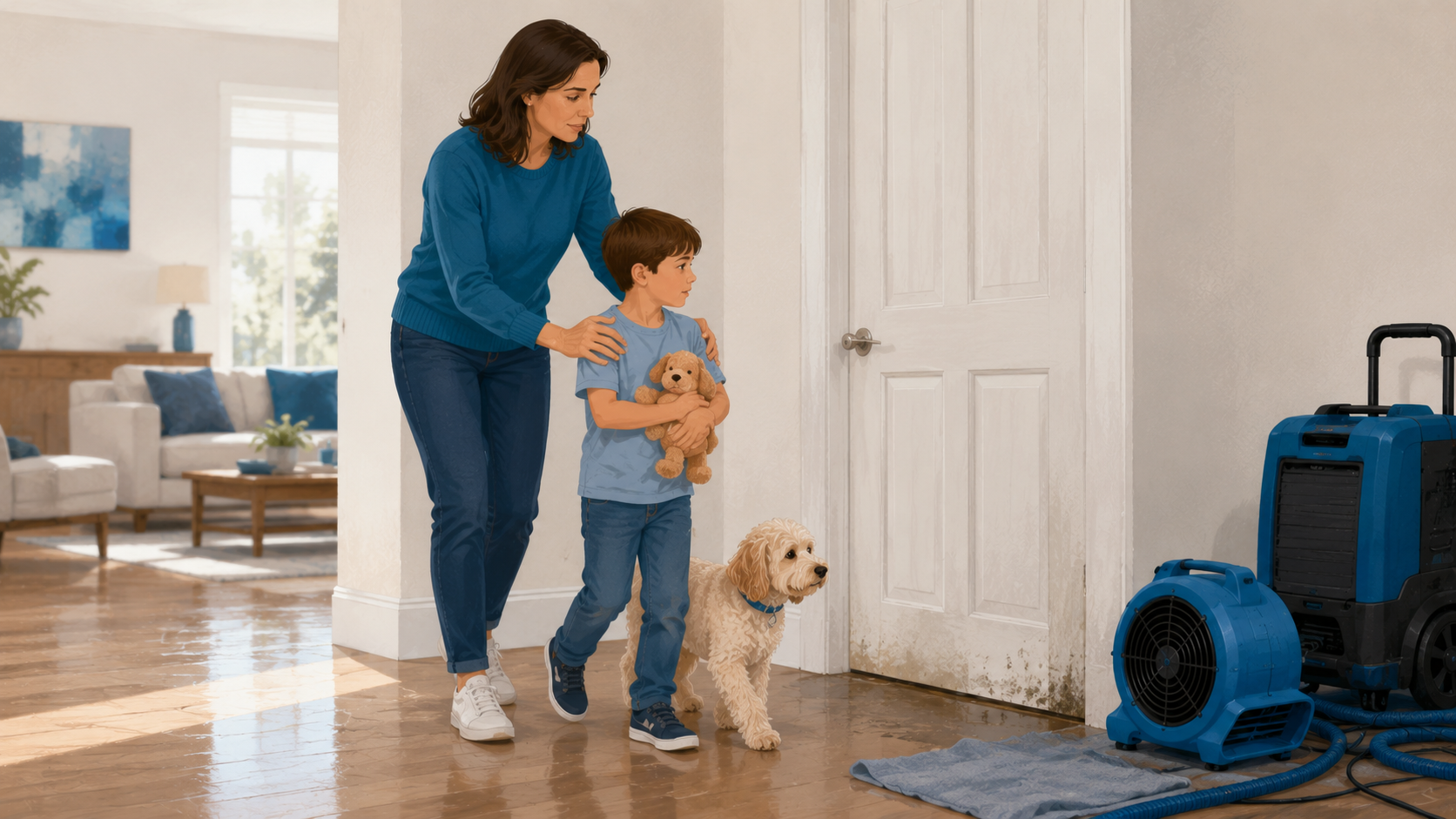
Clear everyone out of the affected room and close it off. Don’t let children or animals near the water, and don’t track it through the house. If the smell is strong, open a window for airflow, then leave.
Stop using water in the house
This one is easy to forget in the panic. Every flush, every sink, every load of laundry sends more water toward a system that’s already backing up. Stop running water anywhere in the home until you know what’s going on. If the backup ties to a main line clog, an upstairs bathroom can push more sewage into the lower level.
Shut off power to the area if it’s safe
If water is near outlets, cords, or appliances, and you can reach your breaker box without stepping in the water, cut the power to that part of the house. Never stand in or touch standing water to reach a switch. When in doubt, leave the power alone and let the restoration crew handle it.
Protect yourself before you touch anything
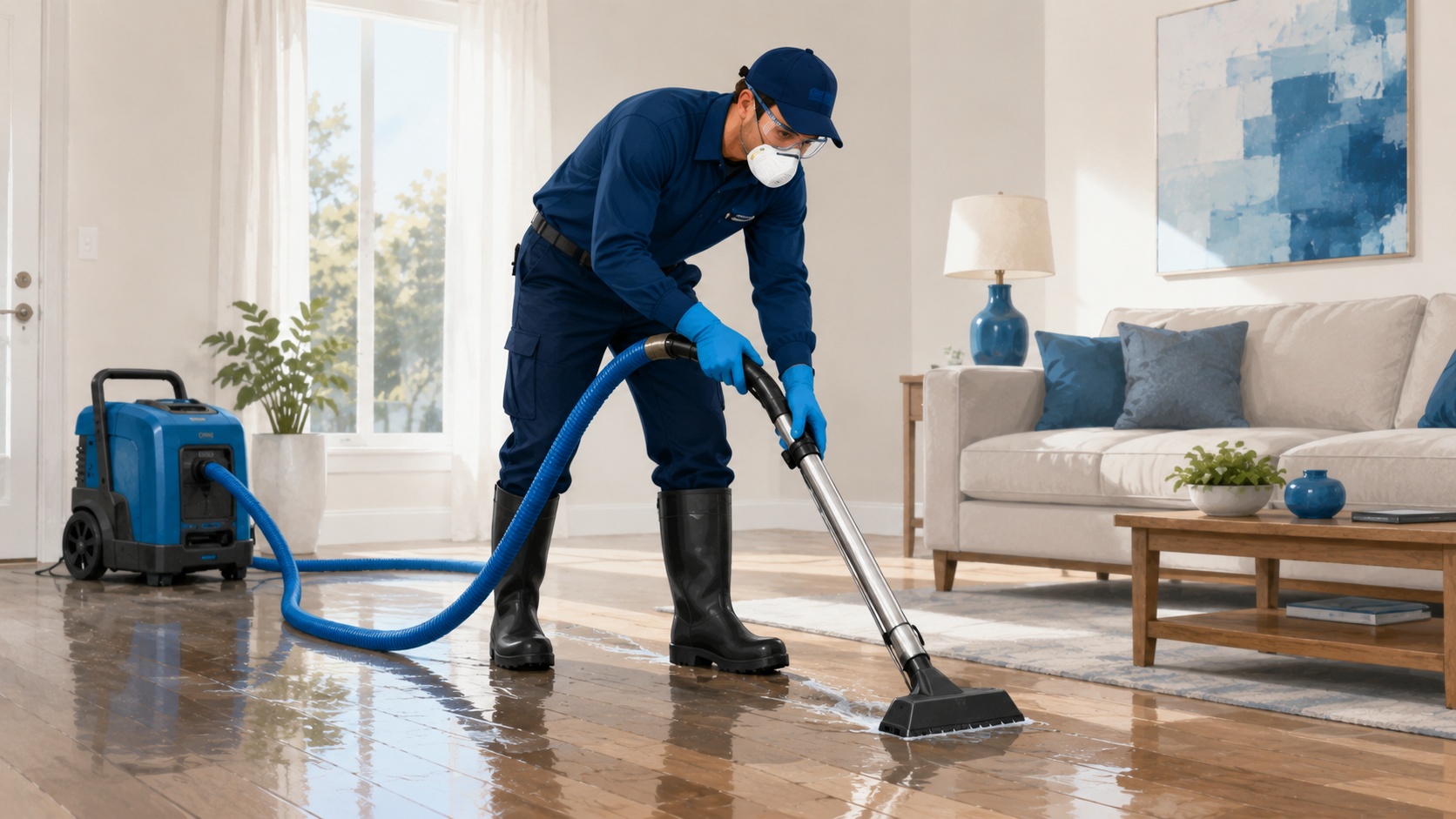
If you’re going to be near the water at all, wear rubber gloves, rubber boots, eye protection, and an N95 mask. Cover any cuts. Wash your hands and exposed skin thoroughly afterward, and put contaminated clothes straight into a hot wash by themselves. It’s the same reason the pros suit up.
Who to call, and in what order
Sewage backups usually need more than one kind of help, and the order depends on the cause.
Call a water damage restoration company first if there’s standing sewage, soaked flooring, or the backup covers more than a small area. This is the crew that does the actual sewage backup cleanup: extraction, sanitizing, tear out, and drying with commercial equipment. Many operate around the clock, which matters because contamination and mold risk climb by the hour.
Call a plumber if the cause is on your side of the property, like a clogged or broken sewer line, a failed sump pump, or roots in the pipe. The plumber fixes why it happened so it doesn’t happen again the moment you clean up.
Call your city or utility if you suspect the blockage is in the public main. If several drains back up at once, or neighbors have the same problem, the clog may be in the municipal line, which is the city’s job to clear. Reporting it can also help your insurance claim later.
Finally, call your insurance company to report the loss and ask what your policy covers. More on that below, because sewage is a special case.
Should you clean it yourself?
For a very small, fresh backup on a hard, sealed floor, a careful homeowner in full protective gear can sometimes handle it: remove the water, bag and toss anything porous that got soaked, scrub with detergent, disinfect, and dry. Even then, most guidance points toward professional help, because the health risk is real and the damage is often deeper than it looks.
Bring in a pro for anything beyond that: a large area, water that’s been sitting for hours, or sewage that soaked into carpet or drywall. Porous materials that touch sewage usually can’t be saved. Upholstered furniture, mattresses, carpet, and padding that soaked up black water generally have to go, no matter how new they are.
Common mistakes that make a sewage backup worse
A few missteps show up again and again, and each one costs homeowners time, money, or health.
Using bleach and calling it done. Wiping the surface doesn’t fix contamination that soaked into the wall or subfloor underneath. If the moisture stays, so does the mold and the smell.
Running the HVAC. Your heating and cooling system can pull contaminated air and spread that odor and those particles through the whole house. Leave it off until the space is cleaned.
Keeping soaked porous items. That rug might look salvageable, but sewage soaked padding and fabric are a health hazard. When in doubt, throw it out.
Waiting to document. People haul things to the curb before taking a single photo, then struggle with the insurance claim. Document first.
Skipping the cause. Cleaning up without fixing the clog or failed pump just sets you up for a repeat.

Does homeowners insurance cover sewage backup?
This one surprises a lot of people, so it’s worth being clear. A standard homeowners policy often does not cover sewer or sewage backup on its own. Coverage usually requires a separate add on, commonly called a water or sewer backup endorsement or rider, that you attach to your policy ahead of time.
If you added that endorsement, it commonly helps with the cleanup and damaged property, often up to a set limit. If you didn’t, you may be paying out of pocket. Coverage is never guaranteed and details vary by insurer, policy, and how the backup happened, so call your own agent and ask about your situation. Save every receipt and photo.
What to do next
Once the immediate danger is handled, the path forward is simple. Keep people out of the affected area, get a restoration crew scheduled for the cleanup and a plumber lined up for the cause, and photograph everything before anything leaves the house. Report the loss to your insurer, bag and remove soaked porous items, and don’t move back into the space until it’s confirmed clean and dry.
Here’s a quick real world example. A homeowner named Ray came home to a half inch of dark water across his basement floor. He shut off water use upstairs, kept his kids on the main floor, snapped a dozen photos, and called a 24 hour restoration line. The crew extracted the water that night, pulled the wet carpet and a few feet of soaked drywall, and set air movers running. A plumber cleared tree roots from the sewer line the next morning. Because Ray moved fast and didn’t mop it himself, the space dried clean with no lingering mold.
Key takeaways
Treat a sewage backup as a health hazard first and a mess second. The water is contaminated, so keep everyone away, wear real protection if you go near it, and stop using water in the house so you don’t make it worse. Get a restoration company out fast for the cleanup and a plumber for the cause, and check your insurance early because sewage backup usually needs a special endorsement to be covered. Move quickly, document everything, and let trained pros handle the parts that put your health at risk.
Frequently asked questions
Is sewage backup water dangerous?
Yes. It’s category 3 or black water, which can carry bacteria, viruses, and parasites that cause illness. Avoid direct contact, keep vulnerable people away, and wear gloves, boots, and an N95 mask if you have to be near it.
How fast do I need to act after a sewage backup?
Right away. Contamination spreads and mold can start growing within about 24 to 48 hours in wet materials. The sooner extraction and drying begin, the more of your home you can save and the lower the health risk.
Can I just clean a sewage backup with bleach?
Not really. Bleach on the surface doesn’t remove contamination that soaked into drywall, subfloor, or carpet padding. Proper cleanup means removing unsalvageable materials, cleaning and disinfecting hard surfaces, and drying the structure completely.
What should I throw away after sewage backup?
Porous items that soaked up sewage usually can’t be saved, including carpet and padding, mattresses, upholstered furniture, and often drywall and insulation that got wet. Sealed hard surfaces can typically be cleaned and disinfected.
Will insurance pay for sewage backup cleanup?
Often only if you have a sewer or water backup endorsement on your policy, since standard homeowners coverage frequently excludes it. Coverage isn’t guaranteed and varies by policy, so contact your insurer, ask about your specific situation, and keep all photos and receipts.
Get help now
If you’re dealing with a sewage backup right now, don’t wait it out. Call for fast 24/7 help or request help through our form, and we’ll connect you with a local pro who can start the cleanup. You can also learn more about our sewage cleanup service or read our guide on what to do in the first 24 hours after water damage.
WaterDamageOnCall is a water damage information and lead request service. We are not a licensed restoration contractor, and this article is general information, not professional restoration, insurance, or health advice. A licensed local pro should assess your specific situation, and any submitted information may be shared with local providers so they can help.