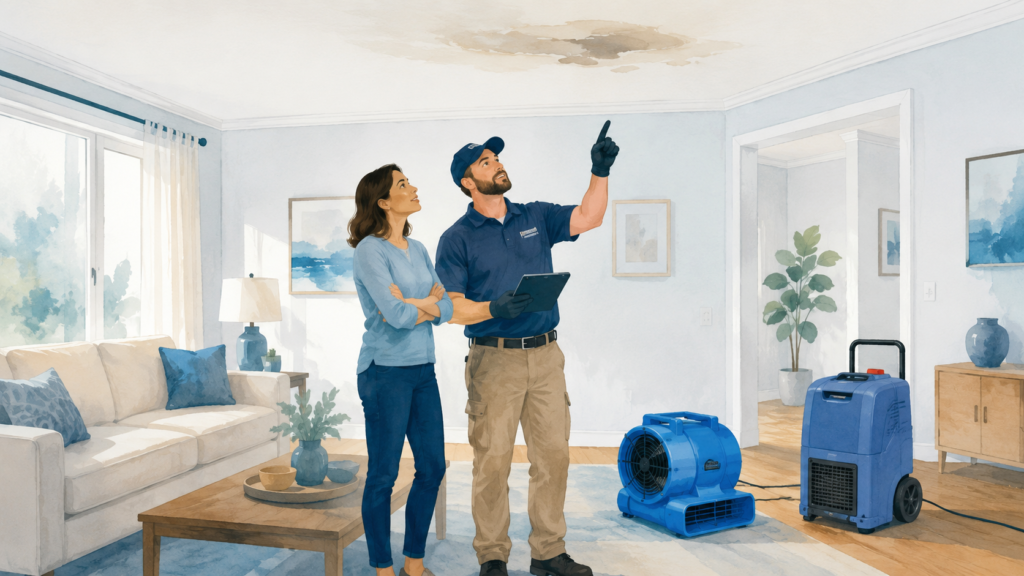
You walk into the spare room, glance up, and there it is: a soft brown ring on the ceiling that wasn’t there last week. Maybe the paint looks bubbled, or a spot has gone dull yellow. Your stomach drops, because a mark like that almost always means water has been somewhere it shouldn’t. The good news is that most of these stains are fixable, and catching one early keeps a small problem small.
A stain is a symptom, not the whole story. Water traveled from above and left its mark, so the real question isn’t how to cover the spot. It’s what caused it, how far it spread, and whether the ceiling is still safe. Here’s how to read a water damage ceiling the way a pro would.
What a ceiling stain is really telling you
When water sits above your ceiling, it seeps into the drywall or plaster and leaves a brown or yellowish ring as it dries. A fresh stain often feels cool and soft, while an old one is dry and crusty. The color hints at the source: yellow to brown rings with a soft, feathered edge usually point to a slow plumbing leak above, while darker, irregular marks can come from the roof. Either way, the stain itself isn’t the danger. What matters is whether water is still coming, so before you plan any repair, focus on two things: is it still leaking, and is the ceiling holding up.

When a water damage ceiling turns dangerous
Most ceiling stains are a moisture problem, not an emergency. But there’s one situation you never ignore. A ceiling that sags, bulges, or bows downward is at real risk of collapse. Drywall that soaks up a lot of water gets heavy and loses its strength, and a saturated section can come down all at once.
Treat it as urgent if you see any of these:
- A visible sag, bubble, or bulge, which usually means water is pooling behind it right now.
- The surface feels soft, spongy, or crumbly when touched.
- Water is actively dripping or the stain grows while you watch.
- The affected area keeps spreading day after day.
Do not poke, press, or lean under a sagging ceiling to test it. Keep people and pets out of the room, and if the bulge sits over a bed, couch, or walkway, stay clear. A pooled bulge can hold a lot of water and let go without warning, so the safest move is to leave it and get a pro on the phone.

First, find and stop the source
Until the water stops, any repair is just makeup over a wound. Fix the ceiling before the leak and you’ll be doing the whole job again in a month. There are four usual suspects: a roof leak, a plumbing leak from a pipe or fixture above, condensation from an air conditioner or bathroom fan, and in cold climates an ice dam pushing water under the shingles. A few simple checks narrow it down fast.
Start with what’s directly above the stain. If there’s living space up there, like an upstairs bathroom, kitchen, or laundry, suspect plumbing first. If there’s only attic or roof above, lean toward a roof problem. Then watch the weather, because a roof leak reacts to rain and a plumbing leak doesn’t. A stain that grows during a storm points to the roof, while one that worsens on dry days or tracks with someone showering points to a pipe.
Still unsure? Shut off your home’s main water supply and wait a few hours. If the stain stops growing, it’s plumbing. If it keeps spreading after the next rain, it’s the roof. You can also check the attic above the stain with a flashlight for wet insulation, water trails, or daylight through the roof boards. Once you find the source, get it stopped, whether that means a valve, a plumber, or a tarp. Only then does ceiling repair make sense.
Can the ceiling be saved, or does it need replacing?
If the stained area is dry, firm, and small, it usually just needs cosmetic repair. If it’s soft, sagging, or the damage is widespread, the material likely needs to come out and be replaced.
A dry, stable stain on drywall often comes down to sealing the spot with a stain blocking primer so the mark doesn’t bleed through, then repainting. Skip the primer and the stain ghosts back through fresh paint every time.
When the drywall is soft, swollen, or drooping, patching won’t hold and it traps moisture that feeds mold. Then a pro removes the damaged section, checks the space above for wetness or rot, dries everything, and installs new material. Plaster follows the same logic: dry and stable can be sealed, while cracked or crumbling plaster needs to be cut out and redone.
How the repair usually goes
Once the leak is fixed and you know how bad the damage is, a typical repair follows a clear path.
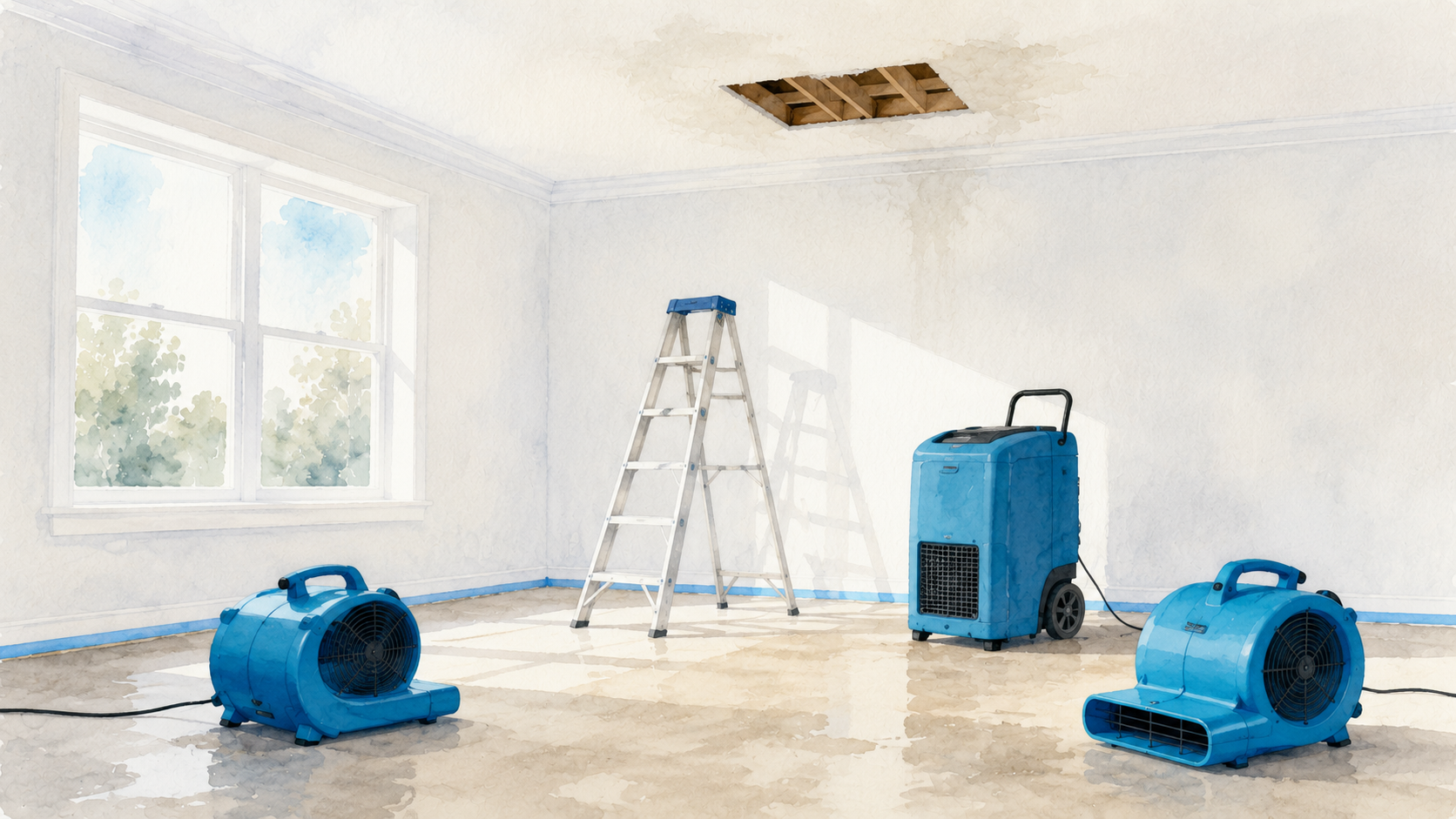
- Dry it fully first. Air movers and a dehumidifier pull moisture from the ceiling cavity. Closing things up while they’re still damp is how mold gets started.
- Remove what’s failed. Soft or sagging drywall, ruined insulation, and water damaged trim come out.
- Check for hidden trouble. With the area open, look for wood rot, more mold, or a leak that wasn’t fully fixed.
- Rebuild and refinish. New drywall goes up, gets taped, mudded, and sanded, then primed with a stain blocker and painted to match.
For a small, dry stain, this is a quick afternoon job. For a soaked, sagging section with mold, it becomes a bigger project worth handing to a professional.
What water damage ceiling repair tends to cost
Cost varies a lot. We don’t set prices, and anyone who quotes a firm number sight unseen is guessing, but we can explain what moves it up or down.
A minor, dry stain that only needs priming and paint sits at the low end, and many homeowners handle it themselves. Costs climb when drywall has to be replaced, when the leak repair is complicated, when a large area is affected, or when mold needs remediation. High ceilings add labor. The biggest driver is usually how long the water sat, because a fast catch stays small while a slow one spreads into framing, insulation, and mold.
If a covered event caused the damage, like a sudden burst pipe, your homeowners insurance often helps, which changes what you pay out of pocket. Coverage is never guaranteed though, and slow, long ignored leaks are commonly denied as maintenance, which is one more reason to act fast. For the full picture, see our guide on the water damage restoration process.
Common mistakes that make it worse
A few avoidable missteps turn a manageable stain into a bigger repair:
- Painting over the stain without fixing the leak. The mark returns and the water keeps doing unseen damage.
- Skipping the stain blocking primer. Regular paint won’t hide a water stain. It bleeds right through.
- Closing up a ceiling that’s still wet. Trapped moisture is exactly what mold needs.
- Ignoring a small sag. A little bulge today can become a collapsed ceiling next week.
- Waiting to see if it dries on its own. Water damage gets worse by the hour, and mold can start in as little as 24 to 48 hours.
A real world example
One homeowner, Dana, noticed a faint tan ring on her downstairs ceiling, right below the upstairs bathroom. It was dry to the touch and only the size of a saucer, so she almost let it ride. Instead she watched it for a day and saw it darken after her family showered that evening, which pointed straight at plumbing, not the roof.
A plumber found a slow drip at the tub’s drain connection and fixed it in under an hour. Because Dana caught it early, the ceiling only needed drying, primer, and fresh paint. Had she painted over it and waited, that small ring could have grown into soggy, sagging drywall and a mold problem.
What to do next
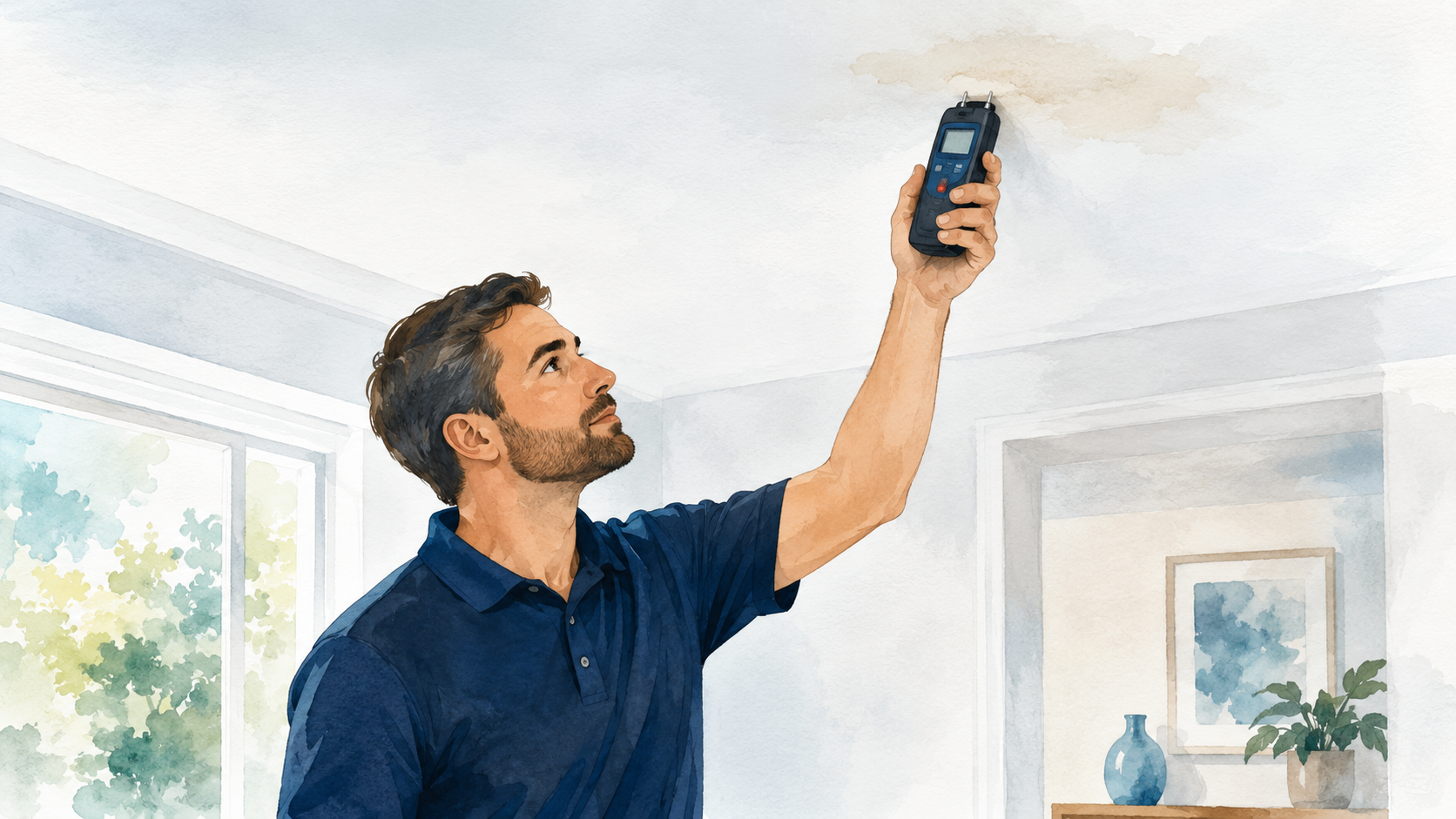
Check for sagging or dripping first, then find and stop the source, dry the area completely, and photograph everything in case you file a claim. If the damage is more than a small dry stain, or you’re worried about hidden moisture and mold, have a licensed local pro assess it. A moisture meter finds water you can’t see and tells you whether the ceiling is truly dry inside. You can get professional water extraction and drying handled quickly, often the difference between a simple patch and a full rebuild.
Key takeaways
- A ceiling stain is a symptom of water above, so find and fix the source before you repair anything.
- A sagging or bulging ceiling can collapse. Keep clear and get help rather than testing it.
- Dry and firm usually means a cosmetic fix with primer and paint. Soft or spreading usually means replacement.
- Roof leaks react to rain and plumbing leaks track with water use, so a shutoff test helps you tell them apart.
- Acting fast keeps costs down and heads off mold, which can start within 24 to 48 hours.
Frequently asked questions
Is a water stain on the ceiling dangerous?
A dry, stable stain is mostly a cosmetic and moisture concern. It turns dangerous when the ceiling sags, feels soft, or keeps spreading, because saturated material can collapse and trapped moisture grows mold. When in doubt, keep clear and have it checked.
Can I just paint over a water damage ceiling stain?
Only after the leak is fixed, the area is fully dry, and you’ve sealed it with a stain blocking primer. Painting over an active leak hides the problem while the water keeps causing damage, and regular paint lets the stain bleed back through.
Is it a roof leak or a plumbing leak?
Check what’s directly above the stain, watch whether it reacts to rain or to water use, and try shutting off your main water for a few hours. Rain driven stains point to the roof, while stains that track with showers point to plumbing.
Will insurance cover a water damaged ceiling?
Homeowners insurance often helps when the cause is sudden and accidental, like a burst pipe, but coverage depends on your policy and is never guaranteed. Slow, long ignored leaks are commonly treated as maintenance and denied.
WaterDamageOnCall is a water damage information and lead request service. We are not a licensed restoration contractor, and this article is general information, not professional restoration, insurance, or health advice. A licensed local pro should assess your specific situation. If you have water damage now, call for fast 24/7 help or request help through our quick form, and we’ll connect you with a local pro.