
The first sign is almost never a black patch on a wall. It’s a smell. You walk down the hallway of your Rancho Cordova house and something’s off, a damp, earthy, old basement kind of smell in a home that doesn’t even have a basement.
That smell matters more here than most people realize. Around the Sacramento metro, mold rarely shows up where you can see it. It sits under a slab, inside a crawl space, or behind a baseboard where a winter roof leak ran down a wall and dried on the surface while the framing stayed soaked.
So here’s the part worth holding onto. Mold needs three things: moisture, something to feed on, and time. Take away the moisture and it stops. That’s why real mold removal in Sacramento is never just wiping down a wall. It’s finding the water first, then removing what grew and drying what’s left.
Why Sacramento homes hide mold so well
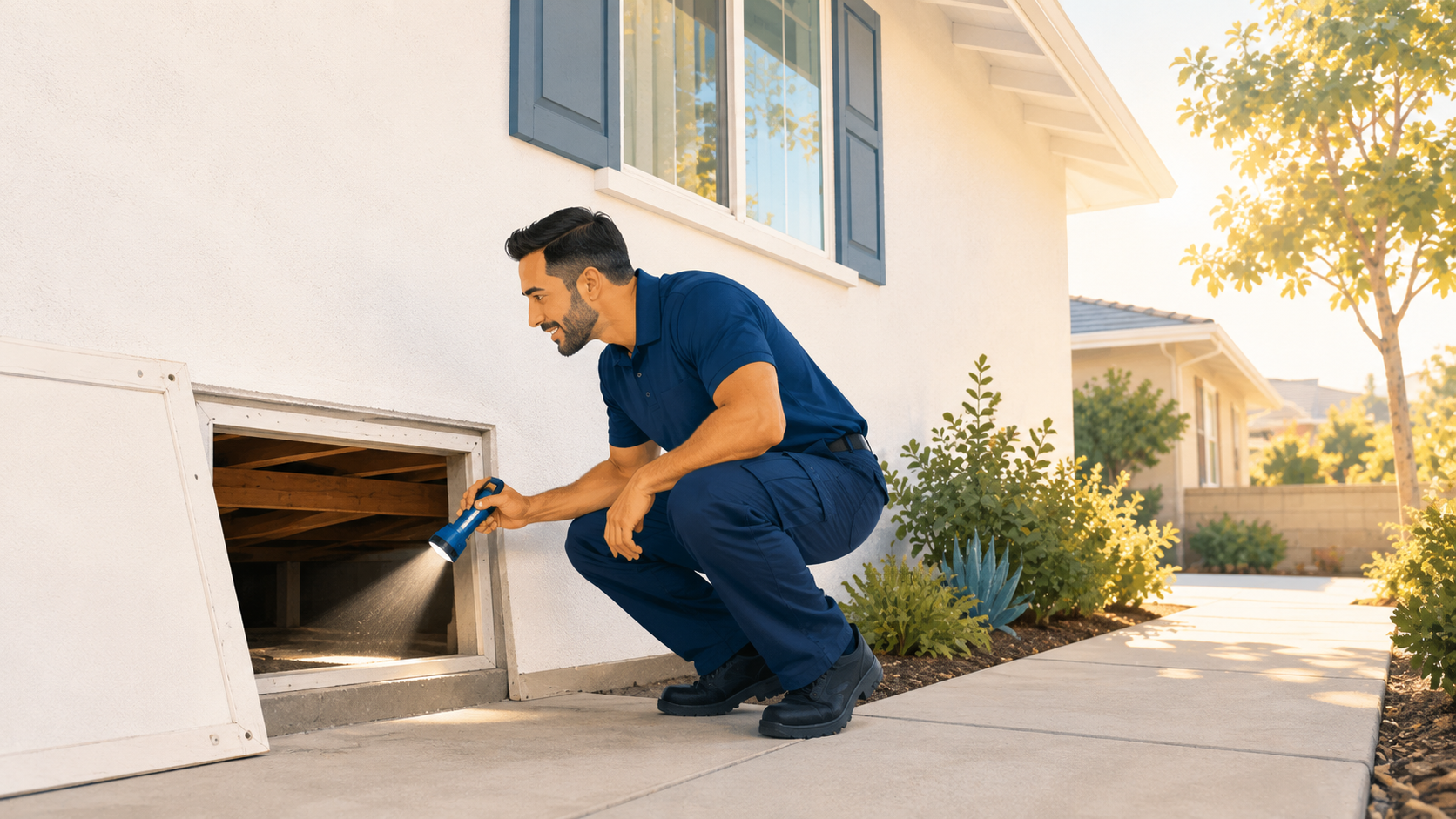
Most houses across Sacramento, Roseville, Folsom, Elk Grove, and Citrus Heights are slab on grade with a crawl space. Very few have a true basement, and that changes how water behaves when something goes wrong. In a basement house, a leak pools where you’ll trip over it. Here it slips under the slab, into the crawl space, or beneath a floating floor, and you never see it.
The local calendar does the rest. From November through March, storms push water past aging roof flashing. Year round, water heaters give out and copper lines under the slab develop pinhole leaks that weep quietly for months. Come summer, condensate lines clog and supply lines let go in the heat.
Then our dry valley air plays its trick, drying every visible surface fast enough that the evidence disappears. The surface looks fine while the material underneath is still soaked. That gap is where mold starts.
The smell arrives before the stain
Musty. Earthy. A little like wet cardboard. If you’re smelling that indoors, something is damp. The California Department of Public Health is direct about it: visible mold, mold odor, dampness, or water damage in a home is unhealthy and should be removed, and there’s no established safe level of indoor mold exposure. Which means you don’t need a lab result to justify acting.
Other signals worth taking seriously: a warped baseboard, a cupping floor board, a soft spot in drywall, a stain that returns after you paint it, or allergy symptoms that ease up when you leave the house.
How mold removal in Sacramento actually works
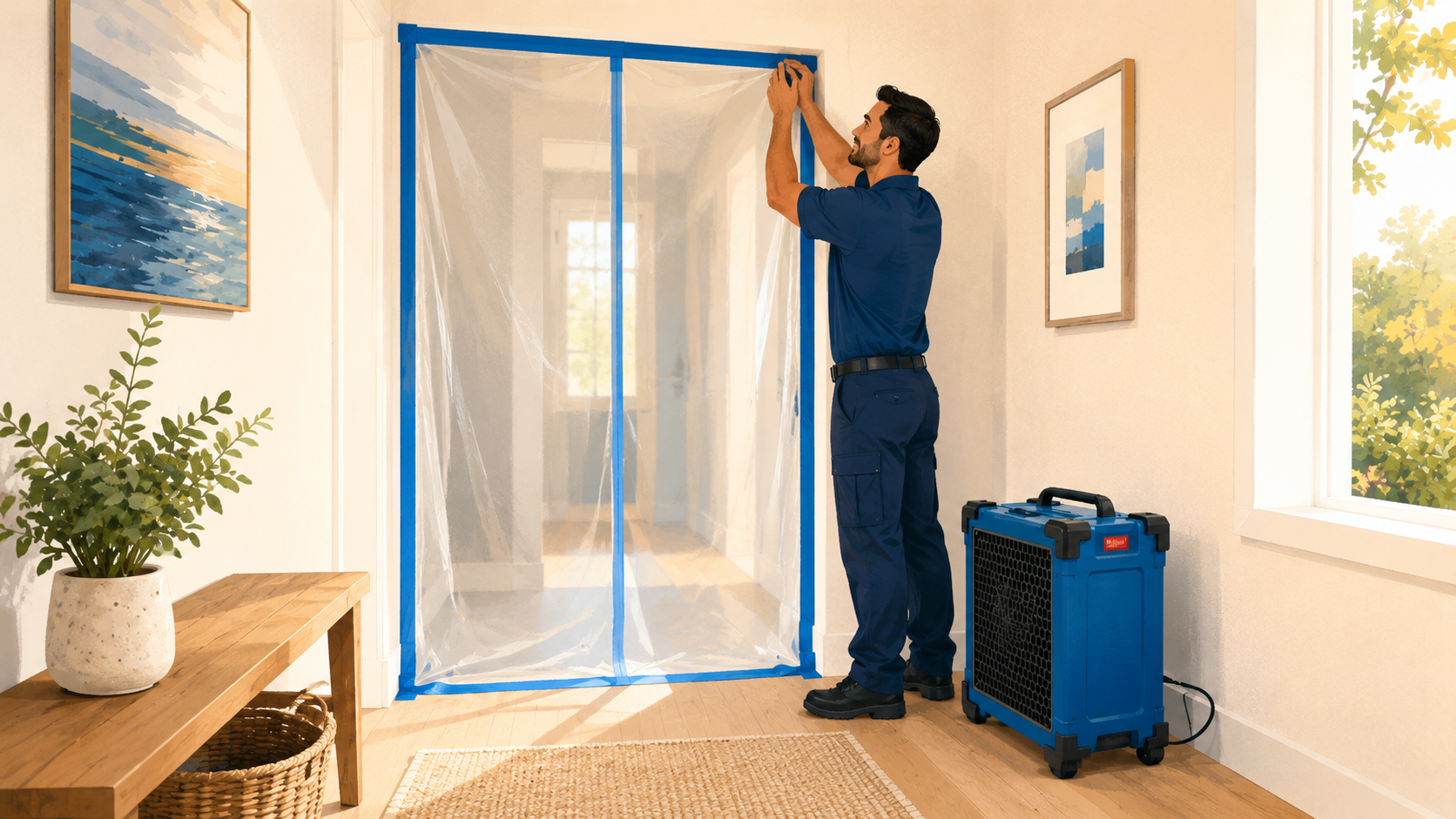
Good crews follow roughly the same order. If someone skips a step, that’s your cue to ask why.
- Find the water. Moisture meters, a thermal camera, and an honest look in the crawl space. Guessing here guarantees a repeat visit.
- Stop the source. A plumber for a slab leak, a roofer for storm damage. Nothing else matters until the water stops.
- Contain the area with plastic sheeting, negative air, and a HEPA scrubber, because mold spreads when it’s disturbed.
- Remove what can’t be saved: wet drywall, insulation, carpet pad.
- Clean what stays, with HEPA vacuuming and detailed wiping of framing.
- Dry the structure until readings match dry material elsewhere.
- Verify, then rebuild. Odor gone, readings normal, clearance testing when the job warrants it.
When you can clean it yourself and when you shouldn’t
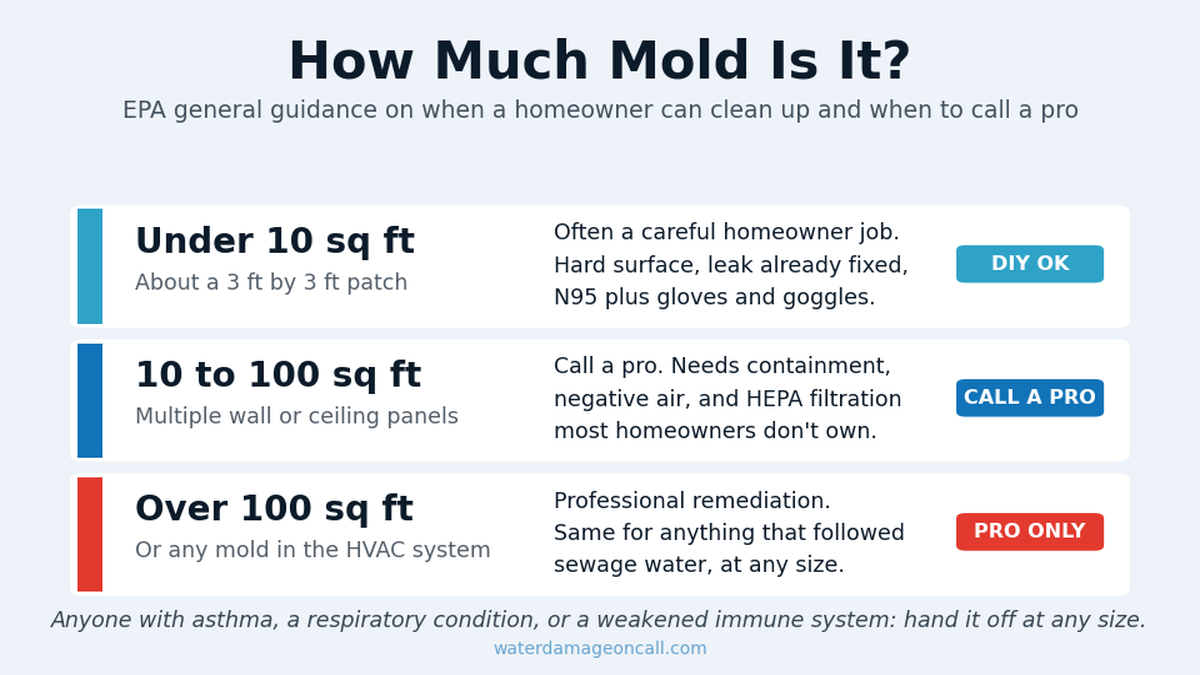
The EPA gives homeowners a rough size rule, and it’s a genuinely useful one. Under about 10 square feet of visible growth, roughly a patch 3 feet by 3 feet, a healthy adult can often clean it safely on a hard surface with an N95 respirator, gloves, and goggles, as long as the leak is already repaired.
Past that, the math changes. The 10 to 100 square foot range calls for containment and equipment most homeowners don’t own, and anything over 100 square feet, anything in the HVAC system, or anything that followed sewage belongs to a professional. Size isn’t the only test, either. If anyone in the house has asthma, a respiratory condition, or a weakened immune system, hand it off no matter how small the patch looks.
What it costs, and what moves the number
We’re not going to hand you a price. We don’t set them, and any figure quoted before someone has walked your home is a guess dressed up as a number. What drives it: how much material is affected, where it lives (a crawl space is slower to work in than an open wall), how long it stayed wet, and how much rebuilding follows.
One of those you control completely. Speed is the only lever that reliably makes the bill smaller. A wall caught in two days is a patch. The same wall caught in two months is a project.

Will insurance pay for mold removal?
Often, yes, though it’s never guaranteed and the details matter a lot.
Homeowners policies commonly cover mold when it grew out of something sudden and accidental the policy already covered, like a burst supply line or a water heater that let go last Tuesday. Commonly excluded: mold from a slow leak nobody addressed, from long term humidity, or from flooding, which needs its own separate policy.
There’s a wrinkle a lot of homeowners miss. Many policies cap mold coverage specifically, at a limit well below the water damage limit, and some insurers sell an endorsement to raise it.
Locally this comes to a head after a winter storm, because sudden versus gradual is exactly the line an adjuster looks for. Dated photos and receipts do more for you than any argument will. Our guide to what homeowners insurance covers walks through that distinction.
How to choose a mold removal company
Here’s something most homeowners don’t know: California doesn’t issue a dedicated mold remediation license. There’s no state mold card to ask for. Contractors doing the construction side of the work do generally need a valid CSLB license, which you can verify yourself in about a minute.
Since the state isn’t screening for you, screen for yourself: a CSLB number you can look up, current liability insurance, IICRC certified technicians, and a written scope with real moisture readings. Then ask how fast they can get here, whether they work directly with your insurance, and how they’ll prove it’s dry. In an emergency, the company that answers the phone at 11pm is worth more than the one with the prettiest website.
Common mistakes that make it worse
- Bleaching it and calling it done. Bleach may lighten a stain, but it doesn’t fix the water, and on porous material it mostly adds moisture.
- Painting over it. Mold keeps growing under paint. You’ve hidden it from yourself, not from the house.
- Skipping the crawl space. In this metro that’s usually where the story is.
- Treating the mold and never fixing the leak. The most expensive mistake here, because you pay twice.
- Tearing into a big patch with no containment, which spreads spores through the whole house.
What this looks like in a real house
Nora, in Folsom, noticed the hallway carpet felt cool and slightly damp near one wall. No leak she could see. Her water bill had crept up two months running and she’d chalked it up to the yard.
A copper line under the slab had been weeping the whole time. When a technician pulled the baseboard, the drywall’s bottom edge and the carpet pad behind it had both grown mold. A plumber rerouted the line, the crew contained the hallway, cut out the lower foot of drywall, and ran air movers for four days. Her insurer covered the water damage and part of the mold work up to her policy’s mold limit. The plumbing repair itself wasn’t covered, which is common and caught her off guard. What she said afterward is worth repeating: the smell had been there for weeks before the carpet ever felt wet.
What to do next
- Stop the water if you can find it. The main shutoff is usually at the street side or in the garage.
- Leave the mold alone. Don’t scrub it, don’t sand it, don’t point a fan at it.
- Photograph everything with dates, including damp areas with no visible mold yet.
- Call your insurer and open a claim, even if you’re not sure it’s covered.
- Get a licensed, insured, IICRC certified pro out today rather than next week.
Our mold remediation service page covers what a professional visit involves, and the mold growth timeline is worth two minutes if you’re weighing how urgent this is. There’s also our guide to water damage restoration in Sacramento, plus the EPA’s mold cleanup guidance.
Key takeaways
- Local slab on grade homes and crawl spaces hide water, so mold here is usually found by smell, not sight.
- Mold removal only works if the water source is fixed first. Everything else is cosmetic.
- Under roughly 10 square feet on a hard surface, a careful homeowner can often handle it. Bigger, or in HVAC, or after sewage, call a pro.
- Insurance often covers mold from sudden accidental water, commonly excludes gradual leaks and flooding, and often caps mold separately.
- California has no dedicated mold license, so verify CSLB, insurance, and IICRC certification yourself.
Frequently asked questions
How much mold is too much to clean myself?
The EPA’s general guidance puts the line around 10 square feet, about a 3 foot by 3 foot patch, on a hard non porous surface with the leak already repaired. Larger areas, HVAC contamination, and anything that followed sewage should go to a professional with containment and HEPA filtration.
Does homeowners insurance cover mold removal in Sacramento?
Often, when the mold came from a sudden accidental event the policy already covers, like a burst pipe. It’s commonly excluded when it grew from a slow leak, ongoing humidity, or a flood. Many policies also cap mold below the water damage limit, so confirm the details with your insurer.
Do I need a mold test first?
Usually not, if you can already see it or smell it. The EPA’s position is that testing generally isn’t needed to decide whether to clean up, because visible mold needs removal either way. Testing earns its keep when you suspect hidden growth or want clearance after a large job.
Getting help
WaterDamageOnCall is a water damage information and lead request service. We’re not a licensed restoration contractor, and this article is general information, not professional restoration, insurance, or health advice. A licensed local pro should assess your situation, and your insurer is the only one who can tell you what your policy covers.
If the smell in your hallway has been there a while, don’t wait it out. Call for fast 24/7 help, or request help through the form and we’ll connect you with a local pro.